





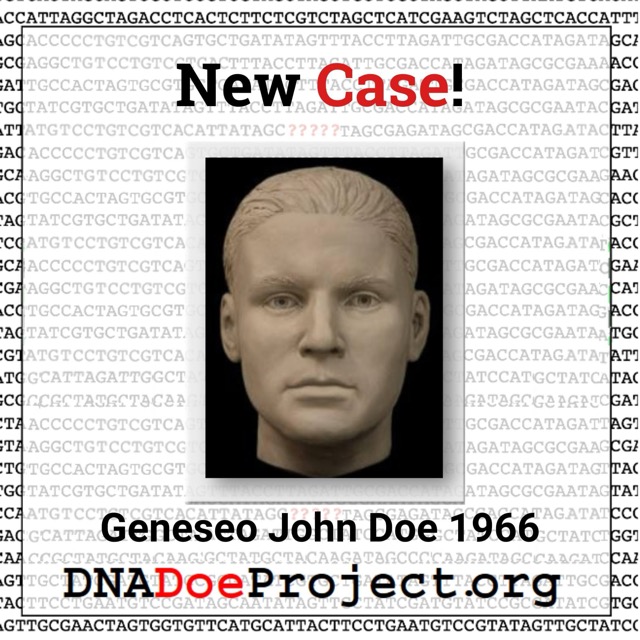
In a unique appeal from Henry County, law enforcement is reaching out for public help to solve a case that has remained a mystery since 1966. They are seeking to identify a young man found deceased over five decades ago. Authorities are encouraging those who have used ancestry and genealogy services to upload their DNA profiles to GEDmatch. This platform has played a critical role in over 400 investigations, using genetic genealogy to connect DNA with potential family links and help identify persons of interest or victims. By opting in, individuals allow their genetic information to assist in both solving violent crimes and potentially exonerating the innocent. Concerns around privacy and the emotional impact of unexpected familial discoveries are being addressed with assurances that law enforcement does not access raw DNA data. For further details on how to contribute to this cause, visit GEDmatch.com. Detective Sergeant Brian Haars from the Henry County Sheriff’s Office sat down with RegionalMediaNews to talk about the history of the discovery and what they are doing now to find his family.
On October 27, 1966, a local Geneseo mail carrier and trapper was walking along a ditch on the Robert Stahl farm when he found a human skull, which started a decades-long search to find the man’s identity. To this day, the land remains in the Robert Stahl family. In 1966, Interstate 80 was not completed between Bureau County and the Quad Cities area. The location is half a mile south of Interstate 80, which wasn’t completed in 1966. The main thoroughfare was Highway 6 in 1966, and the remains were found about a mile off Highway 6. Initially, a human skull was found near Cat Creek, which is southeast of Geneseo. The skull was sent to the Federal Bureau of Investigations (FBI) in Quantico in October 1966. A further search of the area recovered additional skeletal remains. The FBI determined the cause of death was a bullet to the back of the head. A search in the National Missing and Unidentified Persons System (NamUs) produced no persons reported missing in our area during the estimated time of death. The man is estimated to have died one to five years earlier, or approximately 1961 to 1965. They did not recover all the remains of Geneso John Doe 1966, so they estimate his height to be 5’5″ to 5’10” and between 16 and 30 years old. Based on the color of the bones, some of the bones were submerged in water at one time.
The remains were sent back to the FBI in 2016 for additional testing and analysis not available in 1966. Following additional analysis by the FBI, the remains went to the University of Iowa, who confirmed the FBI’s findings.
When the current members of the Henry County Sheriff’s Office discovered an unsolved case from 1966 with an unidentified victim, they looked into options that would allow them to return this man home to his family. This begins the most recent work to identify the man and find his family. The Henry County Sheriff’s Office was able to secure funding from the Henry County State’s Attorney’s Office to help pay the fee for DNA Doe, which covered the majority of the fee. The fee for DNA Doe covers the costs associated with compiling a DNA sample and the research gathered from ancestry sites and obituaries to build a family tree for the unidentified person. The DNA Doe Project is a non-profit agency that functions from fundraisers, donors, and the fees from DNA sequencing. The DNA Doe Project requires a DNA sample to compile its own DNA profile. Dr. Trevor Craig from Geneseo Family Dental offered his services at no cost to remove two teeth from the skull for DNA sequencing by the lab at the DNA Doe Project. The DNA Doe Project used reports from the FBI and the University of Iowa to determine how to best acquire a viable DNA sample from the human remains recovered. Dr. Trevor Craig extracted two teeth and those teeth were sent to the DNA Doe Project. Once the DNA Doe Project lab develops a DNA sample, they will start building a family tree. If they find a potential relative, they will call the Henry County Sheriff’s Office before they call the possible relative. Detective Haars said the Sheriff’s Office would likely take a DNA sample from the potential relative to confirm a familial match for a final confirmation on the identity of the unidentified male. The Henry County Sheriff’s Office possesses a liquid and powder form of DNA from the unidentified male.
There are currently 25,096 missing persons in NamUs, with 17,007 listed as unidentified and 17,868 listed as unclaimed. You can help reunite families with their loved ones by following a few simple steps that take you no more than 15 minutes. Go to GedMatch.com, create a free account, and then click on the drop-down menu and select “Upload DNA.” There are simple step-by-step instructions to upload your DNA from whichever ancestry websites you have previously used. Select “Opt-In” to allow your DNA profile to be used to identify these lost loved ones, return them to their families, and give them a proper funeral. You can choose the level of security on your DNA profile. You can choose private, public opt-out to allow your profile to be compared against unidentified persons, and public opt-in to allow your profile to be compared against unidentified persons and violent crimes. Questions and Answers from GedMatch are included at the end of this article.
Stay tuned for future updates. I ordered an Ancestry DNA kit to show the process first-hand.
The DNA Doe Project was founded in 2017 as a 501(c)3 non-profit corporation with a simple humanitarian mission: to identify John and Jane Does using investigative genetic genealogy. On March 5, 2018, they solved their first case – Robert Ivan Nichols, the John Doe previously known as Joseph Newton Chandler III. On April 11, 2018, they joined local authorities at a press conference in Troy, Ohio, to identify the young woman known as ‘Buckskin Girl’ as Marcia L. King – the first time in history that the world learned of the power of investigative genetic genealogy to solve cold case identifications.
National Missing and Unidentified Persons System – NamUs
By uploading your genetic data to GEDmatch you can empower law enforcement to provide answers to those with missing loved ones. You can also choose to opt in and enable law enforcement to solve violent crimes and exonerate the falsely accused. GEDmatch has already contributed to the successful resolution of more than 400 investigations thanks to the generosity of those who have voluntarily uploaded their DNA files and have consented to their data being included in law enforcement comparisons.
Traditional eyewitness testimony has long been an important part of law enforcement investigations and now your DNA can help too. DNA can act as a molecular eyewitness, providing the approximate age, hair color, eye color, or skin tone of a person of interest. DNA also helps identify people through distant family connections. In a process known as genetic genealogy, family trees can be constructed from sections of DNA passed down from generation to generation.
Genetic genealogy has allowed families to connect, adoptees to identify birth parents, and foundlings to discover their identities. Now it is being used by investigators to make identifications when all other methods have failed.
While genetic genealogy gained notoriety for resolving high-profile criminal cases, its impact is much wider than headlines suggest. DNA can shine a light on miscarriages of justice, freeing those who are wrongly imprisoned. It can also give a name to unidentified remains, bringing closure to families wondering what happened to their missing loved ones. Currently, there are more than 14,000 unidentified bodies in the US alone.1 Each one of them is related to someone, and each one of them is waiting for their name to be restored.
When sharing any information with law enforcement, there are risks to consider before deciding to opt in. For example, you might learn things about yourself or your family that are difficult to hear. There is the possibility that your relatives may be contacted if their DNA could help guide investigators to the correct part of a family tree. The question on whether to opt in is ultimately a personal one: Does the opportunity to resolve investigations and help other families outweigh the potential risks?
No, law enforcement does not get to see your raw DNA data when you consent to allow your data to be included in those types of searches. Just like any other user of GEDmatch, law enforcement can only see your name or GEDmatch alias, email address, and how much DNA you share with the law enforcement profile. Law enforcement uses a purpose-built website called GEDmatch PRO where they upload the investigative profile and let the GEDmatch algorithms do the matching.
GEDmatch provides four categories of privacy options when you upload your DNA kit. Once uploaded, you can easily change from one category or another when you wish.
| Privacy Category | What does it mean ? |
| Private | Your kit is not available for comparisons with any other kits. No comparison results will be shown unless you change this setting to another privacy category. |
| Research | Your kit will not be shown in match result reports generated for other kits. This option is primarily for artificially-created research kits. It may occasionally be used for regular uploads if you have specific reasons for doing so. |
| Public + Opt-Out
|
Your kit will be included in all searches performed via the GEDmatch website for the purpose of general public genetic genealogy research. Your kit will also be included in all searches performed via the GEDmatch PRO website for the purpose of identifying unidentified human remains. Your kit will not be included in GEDmatch PRO searches relating to violent crimes. |
| Public + Opt-In
|
Your kit will be included in all searches performed via GEDmatch and GEDmatch PRO including searches relating to violent crime. |