





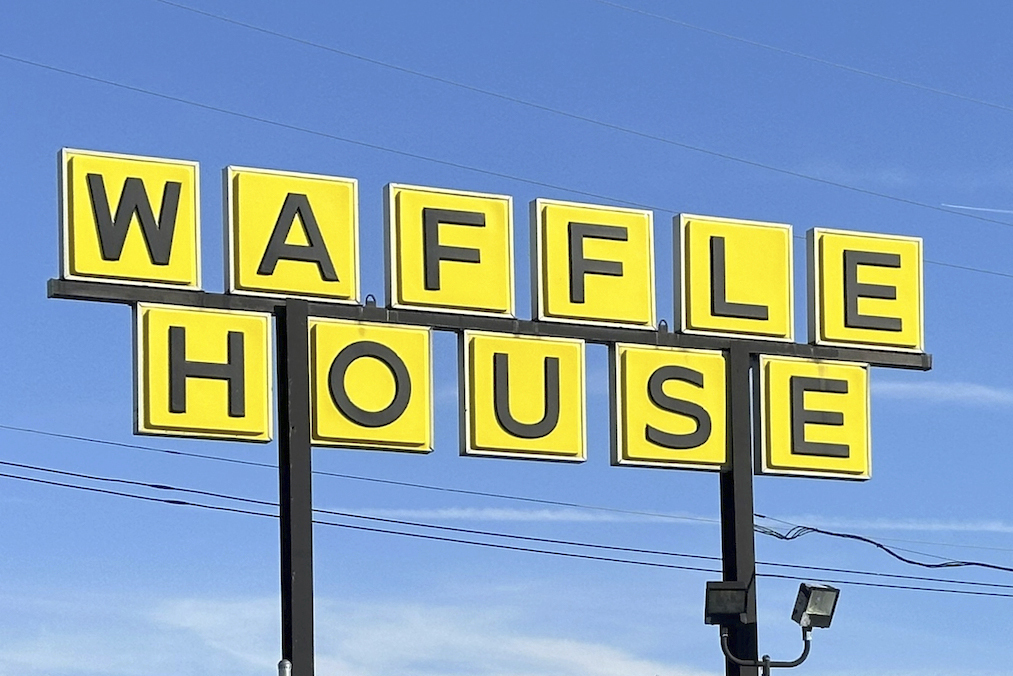
Denny’s and Waffle House have removed surcharges that the two restaurant chains added to their menus when U.S. egg prices spiked earlier in the year.
Denny’s confirmed Thursday that it eliminated its egg surcharge on May 21. Waffle House said Wednesday on social media that it canceled its surcharge on June 2.
Waffle House instituted a 50-cent per egg surcharge in February at all of its 1,900 U.S. restaurants due to the soaring cost of eggs. Denny’s also put a surcharge in place in February, but it varied by location.
Outbreaks of bird flu in January and February caused the average price of a dozen Grade A eggs to hit a record high of $6.23 per dozen in March, according to the U.S. Bureau of Labor Statistics.
More than 174.8 million wild bird and poultry have been killed due to the virus, which began circulating in January 2022. Any time a bird gets sick, the entire flock is killed to help keep the highly contagious flu from spreading. The mass slaughters can affect egg supplies because massive egg farms may have millions of birds.
Egg prices at grocery stores began falling in April as bird flu cases fell and Easter demand eased. In May, the average retail price dropped further, to $4.55 per dozen. That was the lowest price since December, when eggs averaged $4.15 per dozen.
Increased imports of eggs also helped lower prices. U.S. Agriculture Secretary Brooke Rollins said earlier this month that the U.S. has imported more than 26 million dozen shell eggs since January from Brazil, Honduras, Mexico, Turkey and South Korea. The federal government also approved three new facilities for receiving imported eggs.
The government has also completed nearly 1,000 biosecurity assessments on U.S. farms and helped farms pay for biosecurity upgrades, Rollins said.
Still, Rollins said the fall could be “potentially challenging” for egg producers. Wild birds often spread the avian flu virus during their migrations.
Brought to you by www.srnnews.com