







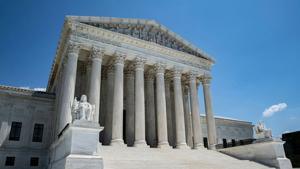
(The Center Square) – The U.S. Supreme Court will decide on Friday whether to consider a case allowing state and local governments to sue fossil fuel companies for alleged damages related to climate change.
The court will decide whether to hear arguments in Suncor Energy Inc. v. County Commissioners of Boulder County. The case, originating in Colorado, centers around a City of Boulder and Boulder County lawsuit in state court against Suncor Energy claiming it misled the public in its activities that led to climate change effects.
Lawyers for Suncor Energy argue that allowing a case like this one to play out goes against protections in the Clean Air Act that prevent lawsuits from occurring against emitters from across state lines.
“Seeking injury in the form of physical harms allegedly caused by global emissions, as petitioners do, is just an indirect method of regulating interstate and international emissions,” lawyers for the oil company wrote in a brief to the Supreme Court.
Christopher Mills, founder of Spero Law, said the lawsuit relies heavily on “nuisance laws” which are used to charge a neighbor who is doing something to lower the value of an individual’s property.
“They’re trying to use state and local tort law to affect policy change about climate change,” Mills said.
Mills said Congress should be regulating issues related to climate change and causing policy shifts instead of the court system.
“The reason these cases have been brought, other than just money, is because some people are frustrated that Congress hasn’t done something on climate change,” Mills said. “The goal here is to affect national policy rather than actually provide any sort of traditional remedy for a local nuisance.”
“Through their advertising, [petitioners] have for decades intentionally misled the public about the impacts of climate change and the role that [petitioners’] fossil fuel products have played in exacerbating those impacts,” a filing to the Supreme Court reads.
Lawyers for Boulder County and the City of Boulder argued that states and municipalities should be allowed to address harms caused by activities which exacerbated climate change.
“There is no constitutional bar to states addressing in-state harms caused by out-of-state conduct, be it the negligent design of an automobile or sale of asbestos,” the filing to the Supreme Court reads.
Cases against fossil fuel companies for alleged impacts of climate change have popped up across the country with varying results.
A South Carolina judge tossed a lawsuit the city of Charleston filed against two dozen oil and gas companies.
In October, justices on the Maryland Supreme Court appeared skeptical of a similar lawsuit seeking to go after fossil fuel companies.
The court considered three separate cases from the Baltimore, Annapolis and Anne Arundel counties against fossil fuel companies, including the British oil and gas company BP. The cases claim fossil fuel companies concealed information about their products’ contributions to climate change.
“It seems like your theory of injury and relief are all tied and necessary for relief on international emissions,” said Justice Brynja Booth.
The U.S. Supreme Court’s decision on Friday over whether to hear this case could have far reaching implications for various pieces of litigation across the country.
“I think the problem’s especially severe because courts would be asked to put a price tag on the cost of one energy company’s contributions to global climate change,” Mills said.