





By Maggie Fick and Bhanvi Satija
LONDON, Dec 29 (Reuters) – Ask executives in the healthcare industry about the future market for weight-loss drugs and the analogies are telling: monthly GLP-1 medicine subscriptions like a streaming video membership; dose decisions managed on a smartphone app; access made as easy as buying a pair of Nikes.
This is their vision of the consumerization of weight-loss as drugmakers Novo Nordisk and Eli Lilly prepare to launch pill versions alongside their blockbuster injectable treatments and increasingly look to cash-pay channels and telehealth to reach tens of millions of Americans.
It is the next big bet for a global obesity market set to expand to $150 billion in value by next decade, where highly effective GLP-1 medications have already transformed treatment: making the class of drugs part of people’s routines between a gym session and doing the daily Wordle.
Reuters spoke to three-dozen people inside the industry including retailers, drugmakers, telehealth providers and investors to show how the weight-loss sector is shifting to better meet consumers.
“We’re imagining these medications may become so common that everybody’s got a GLP-1 app … right there on your phone next to your bank account and your weather app,” Catherine Brown, vice president of clinical services at digital health firm Welldoc, told Reuters. Welldoc has partnered with Lilly to create such an app for medication reminders and recording doses.
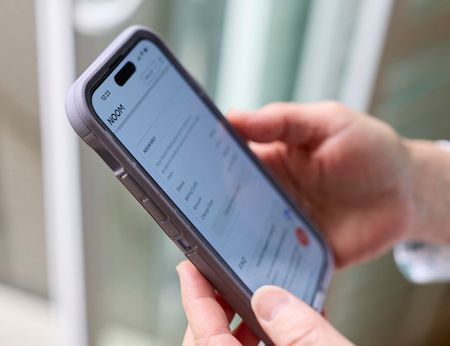
Rachel, a 61‑year‑old retired IT worker in California, turned to telehealth firm Noom in 2021 to help her lose weight without medication. She remains on their app after reaching her desired weight-loss goal with Lilly’s Zepbound, saying that reading the regular health tips it provides keeps her on track.
“Every day you have your little ‘snack,’ mental snack, check-in, and so it helps me stay mindful,” she said.
WEIGHT-LOSS PILLS FOR ‘BATHING SUIT SEASON’
Novo’s Wegovy and Lilly’s Zepbound are sold in pre-filled injector pens used once a week. Weight-loss pills, taken daily, could help reach people who do not like needles, offer more flexibility to “microdose” with smaller amounts of the drug or allow people to take a pill on some days and skip others, analysts and telehealth firms said.
That could allow for regimens targeted just for holidays or “bathing‑suit season,” or facilitate maintenance programs after a patient has lost a desired amount of weight, according to consultants.
If the pills prove popular and more affordable, they could make cash‑pay options a more significant access channel alongside traditional doctor-patient models where coverage for a drug, and a consumer’s out-of-pocket cost, are determined by health insurance plans.
“They’re taking medicine out of medical and making it more of something you can purchase on a regular market,” said Lindsay Allen, a health economist at Northwestern University’s Feinberg School of Medicine, of the telehealth model for GLP-1s. “They’re treating it like you can now come purchase a smartphone.”
Novo’s once-daily Wegovy pill was recently approved in the U.S. and is expected to launch in early January 2026. Lilly’s oral drug orforglipron is under regulatory review and could be on the market within months.
Both companies plan to offer starter doses of their weight-loss pills at $149 per month for U.S. cash-paying customers, making the drugs more affordable when private health insurance will not cover them. The U.S. government’s Medicare and Medicaid health plans are also expected to expand coverage.
Novo has yet to reveal prices for higher doses, while Lilly has said that price will be capped at $399 a month for repeat cash purchasers.
‘YOU DON’T NEED A DOCTOR TO TELL YOU’
The shift has huge medical, social and financial implications. Eli Lilly became the first drugmaker to hit a trillion-dollar valuation this year. Denmark’s Novo became a major contributor to that nation’s economy and was Europe’s most valuable listed firm in 2024, though its shares took a hit on slowing sales growth for Wegovy injections.
The changing market is forcing the drugmakers to hire people with more consumer-focused expertise, strike more deals with telehealth and retail platforms like Amazon.com, and rely on third-party advertising that can at times blur the line between medicine and lifestyle.
“I can charge less and get it to more people at scale and I actually don’t really need a healthcare system,” Lilly CEO Dave Ricks said on the Cheeky Pint podcast in November. “People know how to treat themselves, you certainly know if you are overweight or obese, you don’t need a doctor to tell you that.”
Dr. Robert Kushner, obesity researcher at Northwestern’s Feinberg School of Medicine, expressed concern about direct-to-consumer channels bypassing proper medical supervision.
The drugs have shown benefits beyond weight loss, such as for heart health and sleep apnea, but their side effects can include severe gastrointestinal symptoms and rare incidents of pancreatitis, depression and blindness. Potential long-term risks are yet to be determined.
“We run the mistake of trivializing obesity,” said Kushner. “We need to be just very cautious about who gets the drug, how it’s being used, and if it’s going to be used, it’s being used safely and effectively.”
AN UNTAPPED MARKET OF MILLIONS OF U.S. ADULTS
GLP‑1 drugs are on track to become the biggest drug class in history. Nearly three-quarters of American adults are overweight or obese. But a recent poll shows only about 12% of Americans are currently taking a GLP-1 medication. Pills could greatly increase that percentage, creating a consumer channel that bypasses some traditional gatekeepers, industry experts say.
Novo Chief Executive Mike Doustdar told investors in October that the obesity market was becoming “increasingly consumer-like.” Patients were “knocking on your door and asking for medication,” unlike in Novo’s diabetes business, where patients can be reluctant to start new prescription drug regimens, he said.
Novo has said that cash-pay customers account for about 10% of Wegovy weekly U.S. prescriptions. For Lilly’s Zepbound, that figure is roughly 30%, according to IQVIA data shared with Reuters by an analyst.
Novo plans to launch the Wegovy pill on multiple cash-pay channels from day one, so people can start treatment without waiting for insurance coverage. Lilly said its pill, if approved, can be scaled globally.
LOSE WEIGHT, GAIN ENERGY, ENJOY BETTER SEX
The drugmakers have their own direct-to-consumer platforms, but intermediaries like Noom, Ro and WeightWatchers are becoming increasingly important in providing virtual access to prescribers.
Those platforms have their own marketing strategies more centered around a complete lifestyle improvement than treating a disease. That can help them avoid more stringent U.S. rules for pharmaceutical advertising.
“(Patients) don’t come to us saying ‘I want a GLP‑1,"” said Ro Chief Executive Zachariah Reitano. “They come saying, ‘I want to lose weight, have more energy, less pain, better sex, better skin’ – and we organise care around that.”
LifeMD Chief Executive Justin Schreiber said online platforms like his bundle Novo and Lilly’s drugs with virtual care and then spend their own money on marketing, calling it “essentially free advertising” for the manufacturers.
Many patients prefer online channels, he added, because they are embarrassed to discuss their weight with their local doctor and can face months of waiting for an appointment to get a prescription.
Kevin Gade, chief operating officer at Lilly investor Bahl & Gaynor, predicted that low-dose pills could attract people who want to prevent weight gain in addition to those seeking to shed already accumulated pounds.
“It’s going to be a powerful option for consumers who may never have seen themselves as really overweight,” he said, describing their thinking in these terms: “I know the holidays are coming up. I don’t really care to lose weight, but I want to be able to avoid gaining extra pounds.”
Most industry insiders interviewed by Reuters said that the daily pills would not replace injections, but would broaden the market and help create new patterns of consumer behavior.
“We want to make health a habit,” said Noom’s chief executive, Geoff Cook, adding that the company’s app aimed to make it fun to build daily routines around weight loss.
‘YOU’RE SELLING A LIFESTYLE’
Health‑advertising researcher Erin Willis at the University of Colorado-Boulder said consumers are now bombarded with GLP-1 messages “from every way” as drugmakers, telehealth firms and compounders all push weight-loss offers, creating widespread awareness.
Ahead of the pill launch, telehealth companies are leaning further in to advertising on TikTok and using interactive approaches with memes on forums like Reddit.
Similar to the marketing for erectile dysfunction drug Viagra, GLP-1 use will likely be increasingly touted as improving self-confidence, fitting in to desired clothes, and “living your best life,” said Koen Pauwels, marketing professor at Northeastern University.
That has been helped by celebrity endorsements including ones by Serena Williams and Charles Barkley, who both appeared this year in Ro’s advertising campaigns, and by other public figures from Oprah Winfrey to Elon Musk who openly discussed their use of the medicines.
“What other medication is there where you know which celebrities are supposedly on it?” said Northwestern’s Allen.
(Reporting by Maggie Fick and Bhanvi Satija in London; Editing by Adam Jourdan, Michele Gershberg and Matthew Lewis)
Brought to you by www.srnnews.com