





NEW YORK (AP) – They’re ready to embark on 2026.
Three more dog breeds joined the American Kennel Club’s roster of recognized breeds on Tuesday, making them eligible for many U.S. dog shows and likely increasing their visibility to the pet-loving public.
One of the newcomers is a terrier named for a U.S. president. Another is a toy dog from Cold War-era Russia. The third is a centuries-old French hunting hound. Here’s a closer look:
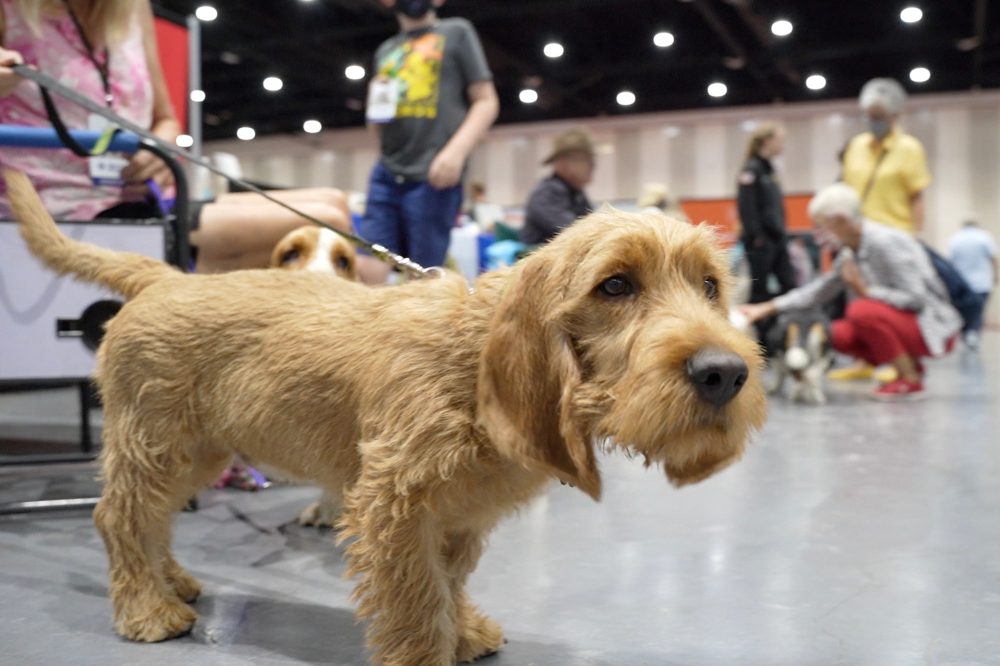
The stats: 12.5 to 15.5 inches (32 to 40 centimeters) at the base of the neck; 23 to 39 pounds (10.5 to 17.5 kilograms)
The topline: A hardy, sociable, compact hound that can hunt all day – and needs mental and physical activity.
The pronunciation: bah-SAY’ fove deh breh-TAHN’-yeh
The translation: Fawn-colored, low-set dog from Brittany
The history: Versions of these coarse-coated, tan-hued hounds go back at least as far as 16th-century French aristocratic circles. The breed has been championed in the U.S. in recent years by Cindy Hartman, a South Carolina service dog trainer who brought a pair of fauve puppies back from France in 2001. She has since trained and placed about 20 fauves as medical alert dogs for people with diabetes, she said.
The quote: “They’re wicked smart, and so if you’re wanting a dog that’s just going to lay around all day long, a fauve is not for you,” Hartman said. “But yet, when challenged mentally and physically, they’re happy to come in with you and curl up on the sofa for the evening.”
The stats: 8 to 14 inches (20 to 36 centimeters) at the base of the neck; 8 to 25 pounds (3.5 to 11 kilograms)
The topline: A solid, energetic small canine that will rid your barn of rodents, alert you to strangers, do dog sports – or just entertain you with its antics.
The history: Originally seen as a short-legged variant of the rat terrier, these dogs were deemed a breed of their own in 1999. The breed was named for President Theodore Roosevelt because of his fondness for dogs, including terriers.
The quote: “They know how to get you to laugh,” says Cindy Rickey of Waynesville, North Carolina, the secretary of the American Teddy Roosevelt Terrier Club. While many terrier breeds are known for being independent-minded, her Teddy competes in obedience. “They’re terriers, no doubt about it, but they also have this tremendous desire to please,” she explains.
The stats: Up to 10¼ inches (26 centimeters) at the base of the neck; 7 to 9 pounds (3 to 4 kilograms)
The topline: A sweet but clever little companion that wants playful interaction, not just snuggling (though it likes that, too).
The pronunciation: zvit-NEYE’-ah boh-LON’-kah
The translation: Russian colored lapdog
The history: The breed was developed in Soviet-era Leningrad (now St. Petersburg) after World War II as a pet for apartment dwellers. American fans have been working to establish bolonki (the proper plural) in the U.S. since the early 2000s.
The quote: “Having a bolonka is like having a 3-year-old kid running around your house. … They can enjoy their time lying on the couch with you, but you’ve got to be prepared to play with them and keep them entertained,” says Denise Dang of Oklahoma City, the secretary of the Russian Tsvetnaya Bolonka Club of America. Owners also need to care for a thick, wavy coat that’s low-shedding but can get matted. Even if it’s cut fairly short, a bath every couple of weeks is wise, Dang says.
The AKC recognizes 205 breeds, including these three newcomers. Fanciers of many others – though, as yet, no “doodles” or other popular poodle hybrids – have voluntarily entered a pipeline that takes years of breeding, documentation and consensus-building.
The club doesn’t limit the number of breeds it might eventually recognize. Spokesperson Brandi Hunter Munden says it’s not “adding dogs indiscriminately,” but rather providing “an established framework for growth, breed standards, competition and education in the U.S.”
Animal-rights activists have long deplored dog breeding and the AKC for supporting it, and the criticism hardened this year into a lawsuit over the health of French bulldogs, pugs, dachshunds and Chinese shar-peis. The group People for the Ethical Treatment of Animals is seeking a court order to stop the AKC from continuing to promulgate the current “standards,” or ideal characteristics, for those breeds.
PETA accused the kennel club of providing “blueprints for the breeding of deformed, unhealthy dogs.”
The AKC denies the allegations and has asked a court to dismiss the case, calling the suit frivolous. The club said it “has been – and remains – firmly committed to the health, well-being and proper treatment of all dogs.”
Brought to you by www.srnnews.com