





By Casey Hall and Nicoco Chan
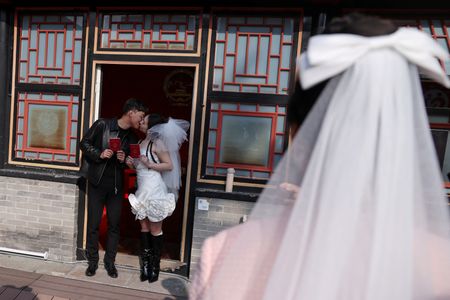
SUZHOU, China, Jan 19 (Reuters) – Wedding vendors at Huqiu Bridal City in Suzhou, one of China’s largest wedding dress markets, are hopeful the country’s positive marriage trends will continue this year.
The rise in marriages in the first nine months of 2025 is a bright spot in China’s otherwise grim population landscape. Official data on Monday showed the country’s birth rate hit a record low last year and its total population fell for the fourth straight year.
Marriage rates rose 8.5% for the first nine months of 2025, according to Ministry of Civil Affairs data earlier this month, buoyed by policy changes and favourable cultural factors.
That increases the likelihood that overall marriage numbers in 2025 will halt a downtrend in annual nuptials that has gone almost uninterrupted for more than a decade.
Chen Juan, the co-owner of Luoyi Bridal, where dresses are priced from 1,000 yuan ($143.51) to around 4,000 yuan for more ornate styles, said marriage rates dropped significantly in 2024 as it was considered an inauspicious year to tie the knot, with many couples delaying weddings to 2025.
The sprawling Huqiu Bridal City is home to more than 800 stores filled with frothy white taffeta, silk and lace dresses.
A nationwide policy change in May 2025, allowing couples to marry anywhere in China rather than in their place of residence, also contributed to the rebound, Chen and other vendors said.
In response, local governments scrambled to attract a new wave of marriage tourists, setting up registration offices around scenic spots, at music festivals – and even in subway stations, shopping malls and parks.
Chen expects growth to continue due to this year’s favourable zodiac, Year of the Horse, which is considered a time of success. However, Chen emphasised the need for further government incentives to make even more of a difference.
“If the government can introduce some relevant incentive policies, this would be very good, because young people’s attitudes (to marriage) have changed,” she said.
A declining interest in marriage and family among young Chinese is widely blamed on the high cost of childcare and education. Some cities and regions have introduced cash vouchers for newlyweds to help convince citizens to tie the knot.
Zhu Jiaomei, 31, who sells made-to-measure gowns at the market, said the overall economy plays an even more important role than specific wedding-related policies in people’s willingness to marry, and the price they are willing to spend when they say ‘Yes’ to the dress.
“The most important thing is that the economy improves, and everyone has confidence in the future. Now, jobs are less stable, so people are tightening their belts,” she said, adding that budgets are commonly half of those seen before the COVID-19 pandemic.
For 48-year-old wedding shoe seller Cheng Yonggui, the prospect of more marriages in the future holds personal significance.
With two sons approaching marriageable age, Cheng said she and her husband are “very anxious” about the prospect of their boys attracting a bride in a country where men heavily outnumber women due to a traditional cultural preference for male children.
In China, it is customary for parents of the groom to help their sons pay for an apartment and car, as well as a kind of dowry in some cases, before any marriage. Cheng estimates this will cost her and her husband “at least a million” yuan per son.
“For us, the pressure is immense, but we’re trying our best,” she said. “I hope more and more people get married, I hope our business gets better and better, and I hope our children live happier and happier lives.”
($1 = 6.9681 Chinese yuan)
(Reporting by Casey Hall and Nicoco Chan in Suzhou; Editing by Jacqueline Wong)
Brought to you by www.srnnews.com