





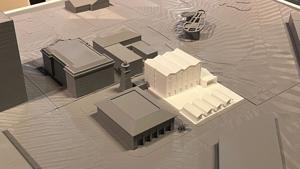
(The Center Square) – Over the next four weeks, Shreveport’s City Council and Zoning Board of Appeals will decide the outcome of a planned expansion for Providence House’s campus to serve a greater number of homeless families.
Both bodies provide an opportunity for public comment.
The expansion is estimated to cost up to $7 million, which will be raised through donations, and will more than double the facility’s capacity. The new campus would be constructed behind the current shelter, on land owned by the nonprofit near Texas Avenue and Crockett Street.
Critics have raised concerns about its impact to the area’s historic character, which is home to several iconic buildings and acclaimed architecture by Shreveport-native Edward Neild, renowned for designing famous buildings across the city.
While voicing their support for the nonprofit’s mission, they disagree with the project’s site plan and location.
The city’s Metropolitan Planning Commission met on June 4 and voted to send Providence’s application forward to the City Council with a recommendation for approval. The council determines whether to approve or deny.
The plan involves construction of a four-story, multi-family apartment building fronted by four single-family homes. The city’s unified development code prohibits group home or shelter housing because it was zoned in 2016 to protect and foster the arts.
The downtown area is experiencing a concern for more people loitering and public camping. The Providence House’s director told The Center Square that their families are not participating in that behavior.
“Our residents are required to be out of the shelter either in school, at work or looking for work,” said Sharpel Welch. “We know that they are doing constructive things during those hours. Those aren’t Providence house residents.”
MPC Director Stephen Jean and Downtown Development Authority Director Cedric Glover moderated a community meeting Thursday evening at the historic Capri Theater to promote communication between supporters, concerned residents and business owners.
Providence provides support services and shelter for approximately 20 families. They help find permanent housing, provide education support, connect parents with job training and host childcare services.
Last year, the nonprofit’s shelter served 400 families, with another 200 people participating in their community education program and homelessness prevention programs, Welch told The Center Square in an earlier interview.
The 2025 operating budget was $2.1 million. Approximately 33% of the money is generated from state or federal grants and contracts; the remaining is raised from general donations, private grants and private donors.
Around 70% of all the funds raised each year is used for programming.
It’s unclear if Thursday’s meeting resolved the issues between critics and supporters but it did provide an opportunity for transparent communication among those stakeholders – the nonprofit’s staff and board, business owners and downtown arts supporters.
The Shreveport Regional Arts Council was one of several organizations or businesses owners who voiced concern about the proposed site plan.
“SRAC will always support the mission of the Providence House,” said Rebecca Bonnevier, the arts council’s director. “These are concerns by SRAC.”
Bonnevier discussed access to Caddo Common Park as a concern, along with several other issues.
Other citizens listed traffic congestion, parking, the construction of a high-density apartment building, obstructing the view of historic buildings, the lot size and the impact on private investment in downtown buildings.
An equal number of people voiced their support, providing historical context and emphasis on the critical role the shelter provides for the community.
“We are literally turning over those 25 rooms within 24 to 72 hours,” Welch said. “We have families waiting to take those rooms.”
Seventy-three families are currently on the shelter’s waiting list, she said, adding that nearly every resident parent is female.
While most veterans are referred to Veterans Administration programs, the shelter did house five veterans last year. Their intake process does not include a question to identify where the families originated from.
There is not one prevailing reason, Welch said, that causes homelessness for local families. “It’s several things that can happen that drive families to our red door.”
The organization maintains a strict policy prohibiting alcohol and drug use. It also provides on-site security and 24-hour surveillance around its buildings.