





By Nathan Layne
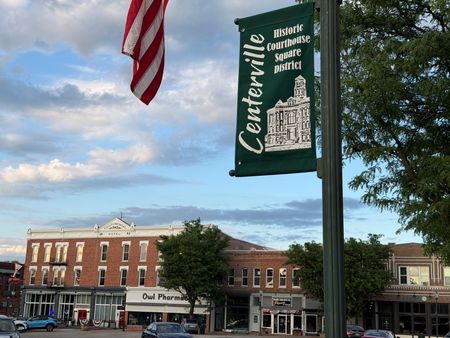
CENTERVILLE, Iowa, July 7 (Reuters) – Shannon Gooden has voted Republican her entire life, including for Donald Trump three times. But the looming closure of the rural Iowa health clinic where she works has her questioning that loyalty ahead of November’s midterm elections.
Her unease over medical costs and access represents an opportunity for Democrats.
In Iowa and other battleground states, Democrats are campaigning against Republican-backed cuts to Medicaid – the health program for low-income Americans – and rising costs, while Republicans argue their policies will curb waste and lower expenses.
“I was raised a Republican, and I’ve always voted Republican, but it’s gotten to the point now, more what are you going to do for us?” said Gooden, 56, who is a receptionist at the River Hills Community Health Center in Centerville, a two-hour drive south of Des Moines. “Something needs to change.”
While River Hills in Centerville has not publicly attributed its planned closure on July 31 to any action by the Trump administration, Gooden sees it as part of a broader rollback of support for low-income Americans.
Gooden represents what Democrats hope is a broader trend: healthcare reemerging as a potent election issue, even as political attention has centered on gasoline prices and conflict with Iran.
Her frustrations echo findings from a Reuters/Ipsos opinion poll last month that found healthcare was the cost voters most wanted Congress to address, ahead of housing, food and gas.
If voters like Gooden follow through in November, Democrats believe healthcare could help them reclaim the House of Representatives from Trump’s Republican Party. In Iowa, they hope the issue will help deliver at least two House seats and boost Josh Turek, whose campaign for an open Senate seat is key to the party’s longer-shot path to winning the chamber.
MEDICAID CUTS A MAJOR FLASHPOINT
A major flashpoint is $1 trillion in Republican-backed Medicaid cuts over a decade. Though they do not take effect until 2027, opponents are already tying them to clinic closures, which providers say are also driven by staffing shortages, low reimbursement rates and fewer people in the areas they serve.
Turek says healthcare is one of the few issues on which voters broadly agree the system is failing Americans, who face high out-of-pocket costs and the risk of losing coverage with their jobs. His first TV ad, released in April, argues the Medicaid cuts are an attack on working-class families.
“It doesn’t matter if I’m in front of a Republican, an independent, or a Democrat. What I hear from Iowans is that the healthcare system is fundamentally broken,” Turek said in an interview after a public roundtable discussion with doctors and nurses in Des Moines.
His Republican opponent, U.S. Representative Ashley Hinson, voted for the Medicaid cuts, arguing that the program is rife with waste and abuse. According to the Centers for Medicare & Medicaid Services, roughly three-quarters of improper payments stem from insufficient documentation, not fraud.
Hinson declined an interview request. Her campaign spokesperson, Billy Fuerst, said in a statement that Hinson would “keep working to expand access and lower costs for Iowa families.”
She has a supporter in Centerville florist Amy Tubbs, who backs the bill’s Medicaid work requirements.
“If you’re able-bodied, an adult, and you can go get a job and work, you should be working and not getting free medical care,” she said.
DEMOCRATS SEE OPPORTUNITY
Iowa is not alone in focusing on healthcare.
Officials at House Majority PAC, the leading outside group backing House Democrats, and its Senate counterpart said they are putting healthcare at the heart of their affordability message. They are targeting battleground states and districts hit by Medicaid cuts and last year’s expiration of subsidies for the Affordable Care Act, the 2010 law that expanded healthcare coverage known as Obamacare.
Their focus includes Texas, California’s 22nd Congressional District and Iowa’s 1st and 3rd districts.
“It’s that double issue in one where we can show that Republicans don’t have a plan to lower your costs, they don’t have a plan to make healthcare affordable, and they own why it’s unaffordable now,” said Lauren French, spokesperson for Senate Majority PAC.
Republicans say their healthcare agenda is focused on lowering costs through market reforms, price transparency and efforts to reduce drug prices, including the administration’s push to cap prescription drugs at the lowest prices paid in other developed countries.
Rather than engage Democrats head-on over healthcare, Republican Super PACs and allied groups are expected to focus on tax breaks on tips and other pocketbook benefits in the tax-and-spending law signed by Trump a year ago, while highlighting the administration’s efforts to lower drug prices and other costs, a party strategist said.
Hinson and other Republicans representing rural areas have defended the Medicaid cuts by pointing to the $50 billion rural health fund enacted alongside the cuts, with funds earmarked for investments in telehealth and other services. Critics counter that the fund will offset a fraction of the projected losses.
Turek, who was born with spina bifida and uses a wheelchair, often draws on his experience navigating the healthcare system to talk about his agenda.
He backs a public option, part of a broader Democratic push to expand health insurance coverage through government support, though he has yet to spell out the proposal in detail. Turek and fellow Democrats also want to reverse cuts to Obamacare and Medicaid they say are eroding care.
“Two in five Iowans who rely on Medicaid in rural communities are already seeing the impact of these cuts, with rural healthcare and hospitals closing,” Turek said during the roundtable event.
FERTILE GROUND FOR DEBATE
Iowa is fertile ground for the debate over access and costs.
KFF, a health policy group, estimates Iowa will lose about $9 billion in federal Medicaid funding over the next decade. Over the past year, seven Iowa clinics and hospitals have announced closures or service cuts, with some citing the expected loss of Medicaid revenue as a factor.
Located in a strip mall in Centerville, a former coal-mining town where poverty is nearly twice the state average, River Hills has long served as a lifeline for local residents. More than half its patients rely on Medicaid, according to Gooden, and some walk to appointments because they do not own a car.
The exact cause of the closure remains unclear. River Hills has cited broader financial pressures facing rural healthcare providers and did not respond to a request for further comment.
For Bev Leffler, a 72-year-old longtime Republican, the explanation matters less than the outcome. She sees the closure and the Medicaid cuts as part of a broader erosion of healthcare access for vulnerable Americans and worries about her great-grandson, who relies on Medicaid to manage diabetes.
“They are targeting the people that need it most, the very poor,” Leffler said. “I would vote Democrat now.”
(Reporting by Nathan Layne; additional reporting by Ahmed Aboulenein in Washington; editing by Ross Colvin and Howard Goller)
Brought to you by www.srnnews.com