





(The Center Square) – Argent LNG signed an agreement Wednesday with Ukraine’s state-owned Naftogaz Group to explore supplying liquefied natural gas from its proposed Lafourche Parish export terminal to Central and Eastern Europe, marking the company’s latest effort to secure overseas customers before construction begins.
The memorandum of understanding calls for the companies to explore distributing up to 25 million metric tons of liquefied natural gas annually, equal to the planned production capacity of Argent’s proposed facility at Port Fourchon, according to Reuters.
Metairie, Louisiana-based Argent previously signed a 5 million ton per year supply agreement in October with Turkey’s national energy bourse, EPİAŞ, which intends to route the gas into Southern Europe. The company reached another 5 million ton per year agreement with the government of Bangladesh to supply Asian markets.
Under the framework, Naftogaz will function as a regional intermediary, routing Louisiana LNG shipped to European import terminals on to Ukraine’s vast, underutilized underground storage network for distribution to democratic allies in the region.
“The signing of this memorandum is an important part of Naftogaz’s strategy to diversify natural gas supplies and strengthen the country’s energy security,” said Serhiy Koretsky, Chairman of the Board of NJSC Naftogaz of Ukraine.
In May, the Louisiana Legislature unanimously passed a concurrent resolution supporting the export of Louisiana gas to democratic global allies rather than geopolitical adversaries and praising Argent’s “Louisiana First” procurement strategy. Argent, which seeks to be Louisiana’s only homegrown LNG exporter, has committed to hiring in-state manufacturers and shipbuilders whenever possible.
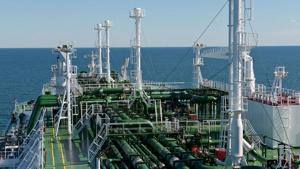
Port authorities and Argent are designing two dedicated export jetties away from the main ship channel to ensure that 1,000-foot-long LNG supertankers won’t disrupt the traffic of oil and gas service vessels and local fisheries, according to news reports.
Instead of building massive, LNG export plants from the ground up-which requires thousands of laborers working in small areas-Argent plans to process gas using 12 modular Baker Hughes liquefaction trains. These prefabricated LNG production modules will be manufactured offsite before being shipped to Port Fourchon on heavy-lift vessels, an engineering approach estimated to cut construction times by 30%.
Other Louisiana exporters moving from traditionally built export facilities to modular construction methods include Venture Global, Commonwealth LNG, and Louisiana LNG.
In a recent Facebook post, Chett Chiasson, Executive Director of the Greater Lafourche Port Commission, noted that despite the factory-built modules, construction of the Argent facility will still rely heavily on local talent. “The Argent LNG project at Port Fourchon is more than just a terminal-it’s a testament to the dedication and expertise of Louisiana’s world-class contractors,” Chiasson posted. “State-of-the-art companies are making this project a reality, strengthening Louisiana’s position in the global energy landscape while delivering long-term benefits for local communities.”
The project has advanced through the federal regulatory process at lightning speed, aided by pre-existing infrastructure at Port Fourchon. Because the location is an already industrialized maritime and energy hub, Argent avoids many environmental hurdles and logistical challenges faced by developers building at sites in the mostly undeveloped, rural coastal parishes chosen by other Louisiana LNG exporters.
Construction work on Phase 1 of the $20-billion export facility is expected to begin as early as 2026 with first production anticipated by early 2030.
“Port Fourchon exists to put reliable American supply behind allies who need it – not as a one-off cargo, but as the kind of long-term infrastructure relationship that actually changes a country’s strategic position,” Argent LNG chief executive Jonathan Bass told Reuters.