





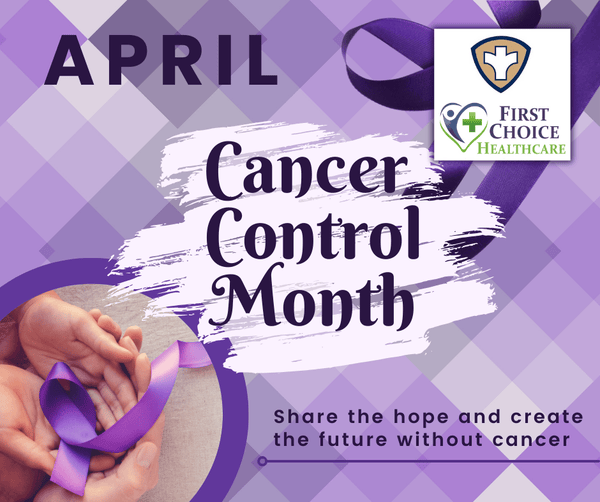
April marks Cancer Control Month, as declared by the Henry and Stark County Health Department and First Choice Healthcare. RaeAnn Tucker emphasizes the nation’s progress in reducing cancer death rates, yet notes cancer remains the second leading cause of death in America. Prevention through lifestyle choices is a key focus. Recommendations include quitting smoking, getting vaccinated against HPV and Hepatitis B, regular check-ups, maintaining a healthy weight, and consuming more fruits and vegetables. Physical activity and avoiding UV rays are also encouraged, along with avoiding harmful substances at work. For cancer information, contact the American Cancer Society anytime at 1-800-ACS-2345 or www.cancer.org.
The Health Department and First Choice Healthcare, along with the American Cancer Society, offer the following 10 steps you can take to a healthier life and reduced cancer risk:
1) If you smoke or chew tobacco, stop! Smoking is a major cancer risk to smokers and everyone near them. If you are going to have a baby and you smoke, you pass the smoke and the risk right on to your baby. The combination of smoking and drinking alcohol is even riskier.
2) Get Vaccinated. Cancer prevention includes protection from certain viral infections. Talk to your doctor about vaccination against HPV and Hepatitis B.
- Human papillomavirus (HPV). HPV is a sexually transmitted virus that can lead to cervical and other genital cancers as well as squamous cell cancers of the head and neck. The HPV vaccine is recommended for girls and boys ages 11 and 12. The U.S. Food and Drug Administration recently approved the use of vaccine Gardasil 9 for males and females ages 9 to 45.
- Hepatitis B. Hepatitis B can increase the risk of developing liver cancer. The hepatitis B vaccine is recommended for certain adults at high risk — such as adults who are sexually active but not in a mutually monogamous relationship, people with sexually transmitted infections, people who use intravenous drugs, men who have sex with men, and health care or public safety workers who might be exposed to infected blood or body fluids.
3) Have regular check-ups. Ask your health care provider about the American Cancer Society’s guidelines for early detection screenings.
4) Maintaining a healthy weight will help you reduce your risk of cancer – as well as heart disease and diabetes. Watching your portion sizes – especially of foods high in fat and sugar – is an important way to help watch your weight.
5) Enjoy more fruits, vegetables, whole grains, and legumes. Eat at least five servings of colorful fruits and vegetables each day. They are packed with disease-fighting nutrients, are generally low in fat and calories, and may help you control your weight. Try to eat at least three servings of whole-grain products each day.
6) Limit how much saturated fat you eat by cutting back on red meats (beef, pork, and lamb), processed meats (bologna, salami, and hot dogs), and high-fat dairy products.
7) If you drink alcohol, limit yourself to one drink a day if you are female and two a day if you are male.
8) Get some physical activity like walking, gardening, or dancing for at least 30 minutes or more on five or more days of the week. Check with your health care provider before you begin an exercise routine.
9) Protect your skin from UV rays. Stay out of the sun as much as you can between 10am and 4pm, when the sun’s UV rays are the strongest. When you are outside, cover up with clothing. Wear a hat with a brim that shades your face, ears, and neck. Use sunscreen with SPF 15 or higher on all skin not covered with clothing. Wear sunglasses with UV protection. Don’t use sunlamps or tanning salons.
10) If you work with harmful chemicals or fibers like asbestos, wear protective clothes and follow directions exactly. Be sure to learn emergency procedures.
For more information on heart health and the services of the First Choice Healthcare Clinics, you may call the location nearest you in Kewanee at (309) 852-5272, Colona at (309) 792-4011, or Toulon at (309) 852-3115; visit https://www.henrystarkhealth.com, or find them on Facebook, Twitter, or Instagram.