







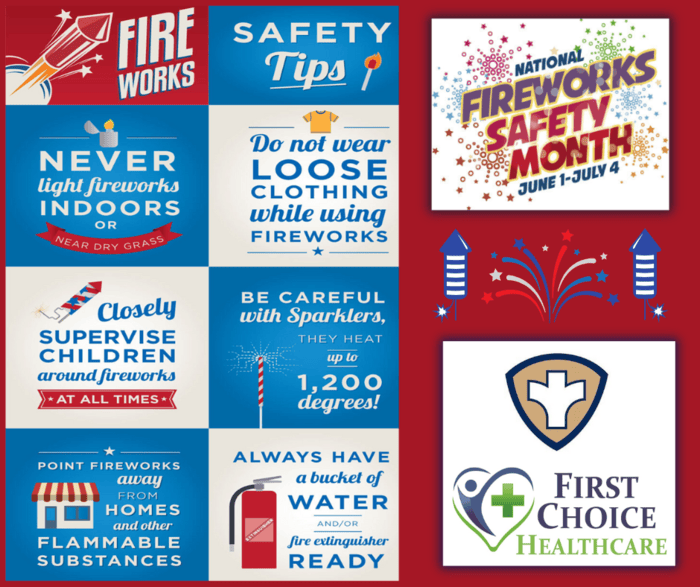
Fourth of July celebrations are fast approaching, and with them comes a sharp rise in fireworks-related injuries. The Henry and Stark County Health Departments warn that nearly 10,000 individuals are hurt each year, with over half of those incidents striking children under 15. Most injuries involve hands, fingers, and eyes, often caused by firecrackers, bottle rockets, Roman candles, and even sparklers. Key safety tips include never allowing young children to handle fireworks, always reading instructions, lighting fireworks outdoors away from flammables, and never relighting duds. For more detailed safety guidance, visit henrystarkhealth.com or find the department on Facebook, Instagram, and Twitter.
“Of special note, those most often hurt in firework accidents are children less than 15 years old. And the injuries they receive include blindings, amputations, severe burns and even death.”
All fireworks, including sparklers—often seen as a safe option—should be used only under close adult supervision. Despite their popularity, sparklers burn at extremely high temperatures and can easily ignite clothing, posing significant risks. Experts warn that children often do not recognize the potential dangers or know how to respond in an emergency. Safety officials urge families to carefully read warnings and supervise all firework use, helping to ensure celebrations stay safe for everyone involved.
Here are some other firework safety facts:
- Never allow young children to play with or ignite fireworks.
- Never point or throw fireworks at another person.
- Firework directions and warning labels should be read and heeded.
- Fireworks should be ignited only outdoors—away from houses, dry grass and bushes, and other flammable materials.
- Fireworks should be lit one at a time after everyone is out of the way. They should never be lit in metal or glass containers.
- Malfunctioning fireworks should not be relit or handled.
- Never experiment with fireworks or mix anything with their contents.
- Fireworks should always be stored in a cool, dry place.
- And finally, make sure fireworks are legal in your area before buying or using them.