





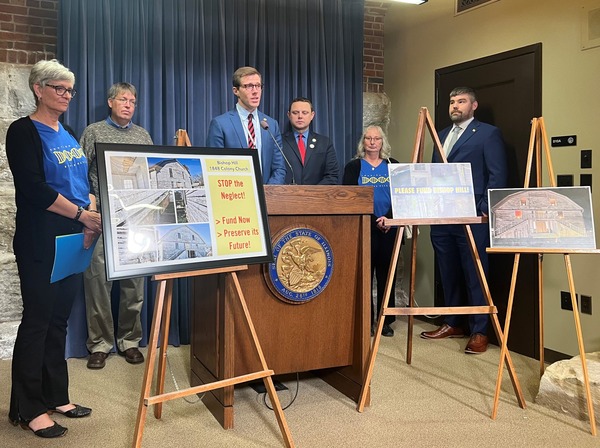
Efforts to restore the Bishop Hill State Historic Site in Illinois are advancing, marking a significant step in preserving this iconic piece of Swedish immigrant history. The Illinois Department of Natural Resources has collaborated with JLK Architects to create a robust architectural plan aimed at tackling the challenges of long-neglected maintenance. Established in 1846, Bishop Hill has faced a series of preservation hurdles over the years. This initiative seeks not only to protect the site’s cultural and historical integrity but also to inspire community engagement and tourism. The project holds promise for revitalizing a cherished landmark.
“This is incredible news and I am so excited for the Bishop Hill community and advocates who have waited so long for these positive developments,” stated Rep. Weaver. “The outreach process that led to this cannot be overstated, as there was incredible work done by so many people. We have had Bishop Hill advocates come to Springfield for a press conference, we’ve brought media coverage out to the Bishop Hill site, people have written letters to their legislators, the IDNR Director has visited Bishop Hill, and advocates have kept the message alive on social media channels for months on end. This has truly been a group effort, and I couldn’t be more proud of everyone’s contributions.”
The Capital Development Board has named JLK Architects to spearhead an architectural plan aimed at restoring buildings at the historic Bishop Hill site. JLK Architects is renowned for its previous work at Bishop Hill, notably completing the Steeple Building Exterior Restoration Project in 2013. This project had a budget of $650,000 and was backed by a Save America’s Treasures grant. JLK’s familiarity with the site is expected to ensure the preservation of the heritage and integrity of these significant structures. The endeavor marks another step in conserving the historical architecture of Bishop Hill for future generations.
“I also want to thank the CDB and IDNR for working with us and prioritizing Bishop Hill,” added Rep. Weaver. “We recognize they have an extremely long priority list and substantial maintenance requests, so it means a lot to us that they are recognizing the needs of Bishop Hill.”
The buildings are owned by the State of Illinois and maintained by the Illinois Department of Natural Resources. Last year, Landmarks Illinois included Bishop Hill on its 10 Most Endangered Historic Places in Illinois List.