





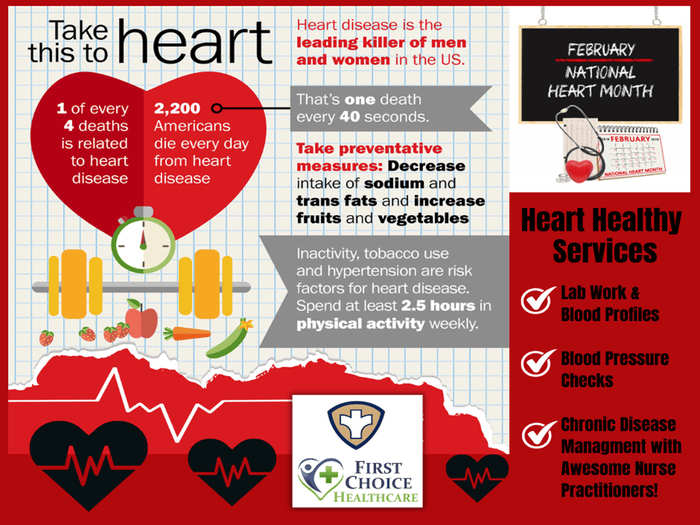
February marks American Heart Month, a crucial time to focus on heart health. The Henry and Stark County Health Departments, along with First Choice Healthcare, encourage residents to take heart health seriously. Family Nurse Practitioners in Kewanee, Colona, and Toulon are available to help manage high blood pressure and cholesterol. Simple lifestyle changes, like eating breakfast and quitting smoking, play a significant role in heart health. Physical activity, even moderate, is vital. Prioritize your heart’s well-being this month.
For more information on heart-friendly programs and services, call the First Choice Healthcare clinic nearest you: Kewanee (309) 852-5272; Colona (309) 792-4011; and Toulon (309) 852-3115, or visit our website at www.henrystarkhealth.com, or find them on Facebook and Twitter.
In addition to routine health screenings, there are more ways to boost heart health, including some you probably didn’t know:
DON’T SKIP BREAKFAST. Fact: Most heart attacks occur between 7am and noon – possibly because the cells that help blood to clot, called platelets, are stickiest then. Eating breakfast appears to make platelets less sticky…and less likely to clump together and block a vital artery.
CUT SWEETS. Sugar is not directly related to heart disease. But cutting back on limits empty calories in your diet and helps leave room for heart-friendly fiber and nutrients.
MEET THE “Bs.” You may have heard about the “antioxidants” – vitamins C, E, and beta carotene – which appear to slow plaque formation in the arteries. Now there’s evidence that folic acid, a B vitamin, and vitamins B6 and B12 may help prevent heart attacks. You’ll get all three “Bs” from a balanced diet.
LIGHTEN UP. People who overreact to stressful situations appear more likely to have heart trouble. Example: In one study, people whose blood pressure and heart rate jumped the most during frustrating tests were also most likely to have reduced blood flow to the heart.
ASK ABOUT ASPIRIN. Aspirin has been shown to protect the heart by preventing clot formation. But don’t start taking aspirin regularly without your doctor’s approval. Besides its many side effects – like stomach irritation – long-term aspirin use may present other potential dangers, like risk of bleeding to the brain.
QUIT SMOKING IF YOU DO. Smoking doesn’t just affect your lungs. Fact is, you’ll cut your risk of heart attack by 50-70% within five years if you quit. Amazing: At that point, ex-smokers have about the same risk of heart attack as people who never smoked.
GET OFF THE COUCH. Sedentary living – not high cholesterol – is the single biggest factor in heart attack deaths. But you don’t have to run marathons. Just 30 minutes of moderate physical activity three times a week delivers the benefits of regular exercise. So walk briskly. Climb stairs. Play actively with kids. Live longer!