





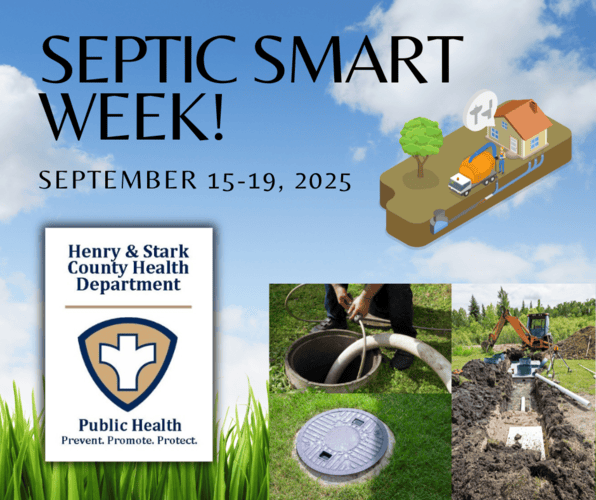
The Henry & Stark County Health Department’s Environmental Health Division is spotlighting Septic Smart Week from September 15-19, 2025, encouraging residents to adopt strong septic system habits. Homeowners with septic systems are urged to act as operators of mini-wastewater treatment plants, essential for community and environmental health. Key advice includes avoiding fats and non-biodegradable products down drains, conserving water, scheduling regular inspections, and protecting drain fields. Proper septic maintenance can prevent costly repairs and safeguard groundwater. For details on system care or local regulations, contact the Health Department at 309-852-0197 or visit the Private Sewage Disposal Program online.
Think at the Sink
Everything that goes down your drain can affect your septic system. Avoid pouring fats, oils, and grease down the sink, as they can clog pipes and drain fields. Use your garbage disposal sparingly and avoid flushing non-degradable items like wipes, menstrual products, and dental floss.
Don’t Strain Your Drain
Conserving water reduces the load on your septic system. Fix leaky faucets and toilets, install high-efficiency fixtures, and spread out laundry loads throughout the week. By reducing water usage, you can help your system treat and dispose of wastewater effectively.
Keep It Clean
Regular septic system inspections and pumping are vital. The EPA recommends having your septic system inspected every three years by a licensed professional and pumped every three to five years, depending on your household size and usage. This prevents the buildup of solids that can clog your system and cause failures.
Shield Your Field
Your drain field is an essential part of your septic system, where the soil filters and treats wastewater. Protect it by not parking or driving on it, planting trees and shrubs a safe distance away to prevent root interference, and ensuring that roof drains and sump pumps direct water away from it.
Protect It And Inspect It
Keep the components of your septic system, like the tank and drainfield, accessible for inspections and maintenance. Know the location of your system to prevent accidental damage during landscaping or construction activities. Regular inspections can catch potential issues early, saving you from costly repairs.
Don’t Overload The Commode
Your toilet is not a trash can. Flushing non-biodegradable items can clog your septic system and lead to failures. Only flush human waste and toilet paper. Meaning NO condoms, cigarette butts, coffee grounds, cat litter, household chemicals like gasoline, oil, pesticides, antifreeze, and paint and pharmaceuticals. Educate your family and guests about what can and cannot be flushed to avoid unnecessary damage.