







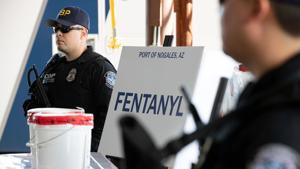
(The Center Square) – Following an alarming rise in fentanyl deaths in recent years, President Donald Trump is taking another step in cracking down on the deadly drug seeping its way onto American streets by designating it a weapon of mass destruction.
The president signed the executive order Monday during an event in the Oval Office, saying the illicit drug “is closer to a chemical weapon than a narcotic.”
The designation comes on the heels of the administration’s increasing military presence in the Caribbean, targeting narco-terrorists and “successful” meetings with Chinese leaders, who have vowed to crack down on the production of precursors of the drug.
Critics of Trump’s move want to address the fentanyl crisis through a different way. For example, a 2024 bill from attorneys general asking former President Joe Biden to do the same thing expressed concerns about political optics and the language akin to military. Overreach and blurred lines in domestic actions, such as rounding up users.
The order would provide the secretaries of the Department of War and Department of Homeland Security to “update all directives regarding the armed forces’ response to chemical incidents in the homeland to include the threat of illicit fentanyl.”
Trump said the fentanyl drug trade “threatens” national security by fueling “lawlessness” in the Western Hemisphere. This is the area of North America and South America, and the islands near each.
“The production and sale of fentanyl by foreign terrorist organizations and cartels fund these entities’ operations – which include assassinations, terrorist acts, and insurgencies around the world – and allow these entities to erode our domestic security and the well-being of our nation,” the order says in part.
Trump said two cartels are predominantly responsible. The Sinaloa Cartel and the Jalisco New Generation Cartel, known also as CJNG, are based in Mexico.
The Drug Enforcement Agency said last December that in 2023, more than 107,000 people died from drug overdoses, with nearly 70% attributed to opioids, like fentanyl.
In late February, the U.S. Centers for Disease Control and Prevention via its National Vital Statistics System predicted a 24% decline in drug overdose deaths for the 12 months ending in September. The finding was based on 87,000 drug overdose deaths from October 2023 to September 2024, down from 114,000 the year prior.
Trump declared opioid overdose a public health emergency in 2017 during his first term.