





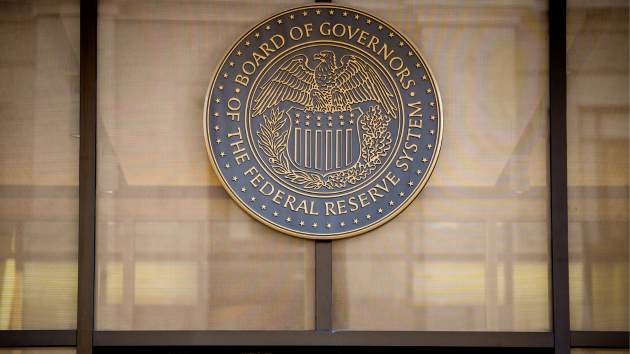
(WASHINGTON) — The Federal Reserve is set to announce its latest adjustment of interest rates on Wednesday, potentially slashing borrowing costs for the third time this year in an effort to boost sluggish hiring.
Top officials at the Federal Reserve have displayed a rare degree of public disagreement over a possible interest rate cut. Inflation has picked up in recent months alongside the hiring slowdown, posing a risk of an economic double-whammy known as “stagflation.”
The Fed is stuck in a bind, since the central bank must balance a dual mandate to keep inflation under control and maximize employment. To address pressure on both of its goals, the Fed primarily holds a single tool: interest rates.
If the Fed holds interest rates steady as a means of protecting against tariff-induced inflation, it risks a deeper slowdown of the labor market. On the other hand, if the Fed lowers rates to stimulate the economy in the face of a hiring slowdown, it threatens to boost spending and worsen inflation.
“We have one tool,” Fed Chair Jerome Powell said at a press conference in Washington, D.C., in October. “You can’t address both of those at once.”
Lately, sentiment shifted in favor of a rate cut as some influential central bankers voiced openness toward the move, futures markets showed.
The chances of a quarter-point interest rate cut stand at about 87%, surging from a level as low as 30% last month, according to CME FedWatch Tool, a measure of market sentiment.
The prospects appeared to move in response to a murky jobs report and public statements from two allies of Powell on the committee charged with setting rates.
Last month, a jobs report for September sent mixed signals about the labor market. Employers added far more workers than expected in September, though hiring fell short of a breakneck clip. Meanwhile the unemployment rate ticked up to 4.4%, a low figure by historical standards but the highest recorded since October 2021.
New York Fed President John Williams, who is often in lockstep with Powell, days later voiced openness toward a rate cut, telling reporters he still saw “room for a further adjustment in the near term.”
Soon afterward, San Francisco Fed President Mary Daley took a similar position, telling reporters she sees room “for a further adjustment in the near term.” Daley, who isn’t voting on interest rates this year, is widely viewed as a supporter of Powell.
A quarter-point interest rate cut would reduce the Fed’s benchmark rate to a level between 3.5% and 3.75%.
That figure would mark a significant pullback from a peak in 2023. At the outset of the pandemic, interest rates stood at 0%.
Still, a reduction of interest rates could offer some relief for mortgage and credit card borrowers. Savers, however, stand to lose income as interest rates decline for accounts held at banks.
Copyright © 2025, ABC Audio. All rights reserved.