





By Melanie Burton and Clara Denina
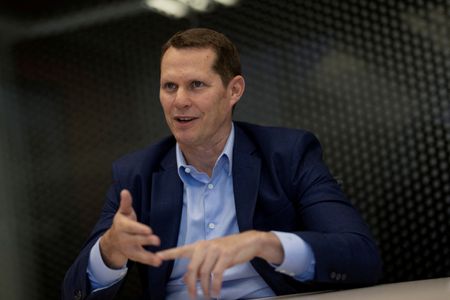
MELBOURNE/LONDON, June 25 (Reuters) – Newly minted BHP CEO Brandon Craig faces a crowded in-tray as he takes mining’s top job on July 1, from threatened iron ore strikes and ballooning costs to a potential uranium push and a febrile M&A backdrop that could yield fresh opportunities.
The 53-year-old starts as geopolitical instability and inflation persist, and as BHP shares trade near a record high hit last week on investor bets that data centres, energy and defence will drive demand for copper and other metals.
“Cost control is definitely a priority in this inflationary environment, especially after the Jansen blowout,” said Elan Miller, a deputy portfolio manager at Blackwattle Investment Partners, which owns BHP shares.
For investors, concerns about inflation and cost overshoots have intensified after BHP last week flagged a $2.3 billion charge due to overruns and a delay at its Jansen Stage 2 project which was under Craig’s purview as head of Americas.
“Capex increases are on everyone’s mind, and BHP has other major projects underway,” said Glyn Lawcock, head of resources research at Barrenjoey in Sydney.
Those projects include BHP’s Vicuna copper joint venture in Argentina and Chile, and Copper South Australia, where a decision on a multibillion-dollar smelter expansion is due by year-end.
Miller said labour relations and productivity in South America and Australia were also major issues.
An immediate challenge will be the growing threat of industrial action in Australia’s iron ore heartland, with unions escalating tensions at BHP’s Port Hedland operations and threatening to mount coordinated strikes for the first time in decades if talks on July 7 fail.
M&A ON THE BACKBURNER
Craig is not expected to immediately follow in his predecessor Mike Henry’s footsteps chasing major M&A. However, in the current environment, opportunities could still come knocking.
BHP pursued Anglo American in the past two years but the London-listed miner opted instead to merge with Teck Resources. When that deal completes, the merged entity could become appealing again, depending on valuations, investors and analysts say.
“BHP and diversified peer Rio are expected to continue to target growth inorganically and organically. BHP’s valuation premium positions them well to pursue M&A,” said Baden Moore, an analyst with CLSA in Sydney.
Glencore has made no secret of its ambitions to get bigger and allow major investors to exit but has been rebuffed, at least for now, by its number one target Rio Tinto, with talks subject to a six-month standstill.
In March, sources said that Glencore CEO Gary Nagle was hoping a surge in coal prices would help bring Rio Tinto back to the table for a fresh attempt at creating the world’s biggest mining company.
While BHP has maintained a focus on growing its own assets, people familiar with Glencore’s thinking said a friendly approach for a conversation by the Swiss trader and miner couldn’t be ruled out.
Glencore and BHP declined to comment on mergers and acquisitions.
URANIUM AMBITION
One area for growth could be uranium, a business that BHP has recently commented on more than in the past. However, it sees achieving sufficient returns from the tiny market as a major hurdle, investors and analysts said.
Craig told one investor that he would have a “really good look at uranium, but scale is hard.” The investor declined to be named because it was against company policy.
Uranium demand is expected to grow as power-hungry data centres boost the need for new generation capacity, including nuclear plants, while governments also look to diversify their energy sources in the wake of the Iran war.
Analysts point to potential from BHP’s Australian copper expansion, where the company already produces around 5% of global uranium supply as a byproduct from Olympic Dam, but it has so far ruled out any significant increase in uranium.
BHP has been increasingly highlighting uranium as a “future facing commodity,” with an improving demand profile. CFO Vandita Pant said in May BHP regularly reviewed its core commodities, adding that it was “very comfortable” with its position in uranium at Olympic Dam.
Speaking at the Bank of America conference in May, Craig said he would consider making bolt-on acquisitions to secure growth, where they brought value.
Craig, whose appointment in December surprised investors, may face departures among senior executives. CEO transitions typically spur around a third of top management to depart within a few years, a pattern BHP Chairman Ross McEwan in March called a natural outcome of competitive succession processes.
Senior executives, including CFO Vandita Pant and Australia President Geraldine Slattery, had been seen by some investors as leading contenders for the top job.
(Reporting by Melanie Burton in Melbourne and Clara Denina in London; Editing by Veronica Brown and Sonali Paul)
Brought to you by www.srnnews.com