







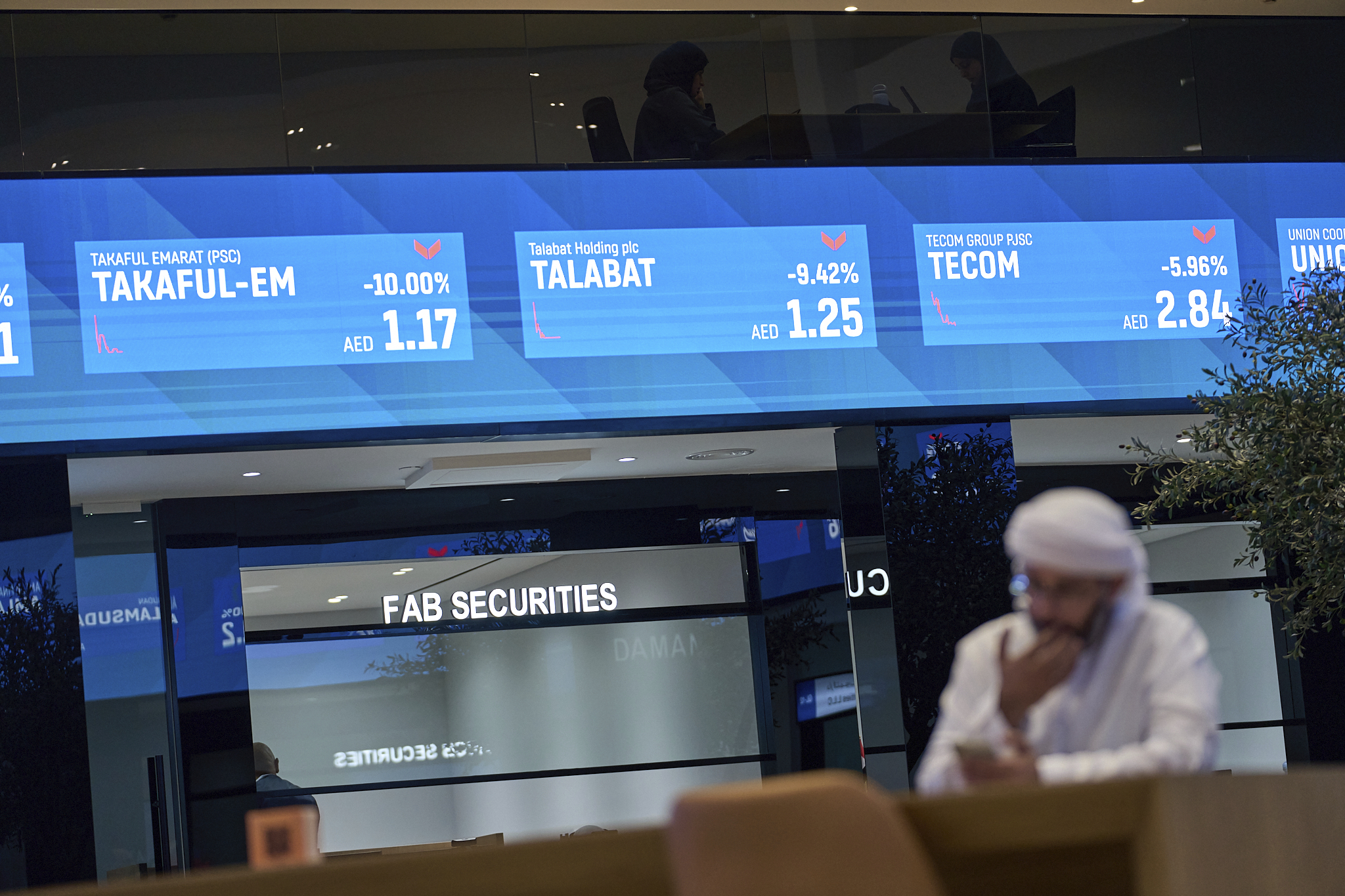
DUBAI, United Arab Emirates (AP) — Countries across the Middle East and North Africa face significant challenges to economic growth as the region faces economic uncertainty due to tariff measures, lower-than-recent oil prices and cuts to financial aid, the International Monetary Fund said Wednesday.
The IMF’s regional outlook report for the MENA region said Brent crude oil prices — which are down from highs above $120 a barrel in 2022 — are likely to be $65 to $69 per barrel in 2025 and 2026, making energy-exporting economies vulnerable to market fluctuations.
Tariff plans by the U.S. and other countries and geopolitical tensions also have created mounting economic uncertainty globally that is weighing down on the region’s economies, which could negatively impact their growth by anywhere from 2% to 4.5%, said Jihad Azour, director for Middle East and Central Asia at the IMF.
“Therefore countries need to react and need to devise policies in order to protect their economies,” Azour said in an interview in Dubai.
Reductions in foreign aid coming into the region also will play a role, Azour said, as U.S. President Donald Trump has pulled his country back from its position as the world’s single largest aid donor.
“The drop in international assistance, especially for countries in fragility, is something that is creating new risks for the region,” Azour said.
Growth in the MENA region is expected to be 2.6% this year, as compared to 1.8% last year, Azour said, but he added that global uncertainty could impact the outlook.
Economies in the Persian Gulf continue to attract substantial foreign direct investment, rising by nearly 2% of GDP since the pandemic, while other MENA nations struggle with slower inflows.
The IMF says it is willing to work with some of the struggling nations and the new government in Syria. He also said that IMF staff and Lebanese officials were in discussions in Lebanon.
“The Syria recovery will be a long process that would require mobilization of regional and international support and also a comprehensive program of building institutions, reforming their economy, and also addressing a certain number of key issues like infrastructure, refugees and rebuilding a new social contact,” Azour said.
Despite the global economic uncertainty, MENA nations can drive growth through structural reforms and diversifying economic ties, the report said.
Brought to you by www.srnnews.com