





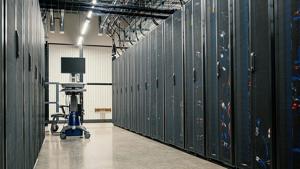
(The Center Square) – A “week of action,” including public rallies, protests and meetings, are scheduled this week statewide to express opposition to data centers being built in Texas.
The events involve multiple grass roots organizations and are being sponsored by Alliance for a Clean Texas (ACT) and Public Citizen-Texas.
The Action Network has posted the events online stating they are “opportunities for Texans from every part of the state and all backgrounds to make our voices heard about the ways that the rapid expansion of data centers is harming communities and the environment.”
The first rally was held Monday morning ahead of state legislative hearings being held this week. On Monday, the Texas Senate Finance Committee held a hearing to discuss current policy that allows multi-million and billion-dollar companies to receive tax exemptions and pass on electrical infrastructure costs to ratepayers.
On Wednesday, the Senate Business and Commerce Committee is holding a hearing on the impact of data centers on the Texas grid, electric demand and electric transmission. The groups called on Texans to testify at both hearings “to demand reliable and affordable electricity for residential and small commercial customers.”
There are currently more than 140 data centers being built in Texas, The Center Square reported. The largest hyper scale data centers use between three million and five million gallons of water a day, the equivalent of a city of 30,000-50,000 people, according to Texas Tech University’s Water Resources Center, NBC News reported.
The groups involved in the “week of action” have urged Gov. Greg Abbott to call a special legislative session to issue a moratorium on data center development. Abbott last month issued a directive to the Public Utilities Commission (PUC) and the Electric Reliability Council of Texas (ERCOT) to ensure that data centers’ interconnections will result in reduced residential electrical bills and add to Texas’ electric capacity.
His directive requires data centers to pay for all electric infrastructure costs, to not pass on the costs to local ratepayers, to build the centers with water-efficient technologies like closed-loop cooling systems and not drain local water resources. It also requires data centers to reduce impacts on communities, including using noise-reduction technology, among other measures.
Abbott also said he’s working with state lawmakers to propose codifying these regulatory restrictions, including requiring yearly reporting of electricity and water usage data to the PUC. He also called for the legislature to repeal sales tax exemptions and “other outdated or unnecessary incentives for data centers.”
When issuing the directive, Abbott said, “Data centers that want to do business in Texas must meet a clear standard. Texas requires companies to put communities first, protect our natural resources and power grid, and respect the quality of life of our residents.”
In response to his directive, one data center in East Texas, Diode, withdrew its project acknowledging it could not meet these requirements. “Diode did the right thing,” Abbott said. “If other data center developments refuse to meet these standards, I expect them to do the same.”
Other anti-data center events scheduled this week include webinars related to data center impacts on water, land and noise, electric grid impacts, air pollution and a series of skills training topics; as well as social media coordinated campaigns.
Public Citizen-Texas published a policy guide about data centers. It explains that “cities have the authority to stop data center proposals through zoning. Counties do not, unless they have been explicitly granted zoning authority from the state,” which is why the groups are calling for legislative reforms.
Another group involved, Texans against Data Centers, argues, “The rapid construction of data centers across Texas is posing a significant threat to the land that we love. … In rural areas, the influx of data centers disrupts local ecosystems, threatens the agricultural foundations, and competes for scarce water resources crucial for farming.”
It also argues data centers are and will create “increased traffic, noise pollution, and a strain on local infrastructures that are not equipped to handle such rapid development. Whether urban or rural, Texas does not have the resources to support this explosion of data centers.”
“Residents throughout the state are being asked to not water their lawns and farmers can’t provide water for their cattle, yet data centers are allowed to drain our precious remaining water?” the group asks. “By rallying together as Texans, we can send a strong message to policymakers that unchecked and unplanned growth is unacceptable,” it adds, urging Texans to sign a petition opposing data center development in Texas.