





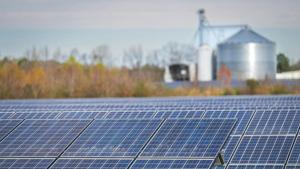
(The Center Square) – As large-scale solar projects become a growing part of Pennsylvania’s energy mix, policymakers and communities are confronting an increasingly important question: What happens to the panels and other equipment when these facilities reach the end of their useful lives?
Solar panels generally have a life span of 25 to 30 years; although systems may continue operating, be upgraded or be repowered. A new state law will ensure that when facilities are ultimately retired, landowners are not left with the cost of removing them.
Senate Bill 349 was signed into law by Gov. Josh Shapiro on July 20 as Act 44 of 2026 after passing the House on July 12 by a vote of 196-6.
The law establishes statewide decommissioning and financial-assurance requirements for certain solar facilities larger than 2 MW built on leased land.
Under the law, developers must remove a covered facility within 18 months after it stops producing electricity unless they are actively working to restart it. They must also provide landowners with a decommissioning plan and proof that money will be available to complete the work.
Financial assurance begins at 10% of the estimated decommissioning cost before construction and is updated every five years. The required amount gradually increases, reaching 100% of the estimated cost by the project’s 25th year, subject to allowable salvage-value deductions and minimum funding levels.
Sen. Gene Yaw, R-Williamsport, the bill’s sponsor, said the new law requires developers to plan for the full life cycle of their projects and provides greater accountability when those facilities are no longer operating.
Supporters include the Pennsylvania Farm Bureau and several solar associations.
A Farm Bureau spokesperson called the measure “a critical step” toward balancing the growth of renewable energy with the long-term interests of Pennsylvania farm families.
The organization said the requirements will help ensure that farmers who lease their land for solar projects are not left responsible for removing the equipment when a project ends. “It’s a commonsense approach that supports responsible energy development while safeguarding agricultural land for future generations,” it said.
Tim Pawlenty, president and CEO of the Solar Energy Industries Association, called the law a “bipartisan win” for energy affordability, economic strength, and Pennsylvania landowners.
He said the measure provides clear expectations for developers and landowners while holding developers responsible for meeting state requirements.
The Pennsylvania State Association of Township Supervisors, or PSATS, opposed the measure and asked Shapiro to veto the bill.
PSATS said the statewide system will preempt and invalidate municipal solar decommissioning provisions when most of the law takes effect in January.
The organization had asked to grandfather existing ordinances, arguing that the law could undo years of hard work by township officials to establish local decommissioning requirements.
Green Clean Solar, a solar decommissioning company, estimates that Pennsylvania is now one of approximately 35 states with some form of statewide solar decommissioning policy.