







By Bhanvi Satija and Robin Respaut
LONDON, Dec 9 (Reuters) – Women with polycystic ovary syndrome are increasingly turning to blockbuster weight-loss drugs from Eli Lilly and Novo Nordisk to manage the hormonal disorder’s symptoms, according to an exclusive analysis of U.S. patient records and interviews with obesity specialists and gynecologists.
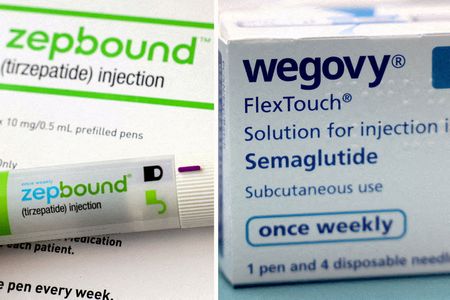
U.S. prescriptions for these GLP-1 drugs among women with PCOS have risen more than sevenfold since 2021, a review of 120 million patient records by health data firm Truveta shows. The analysis covered semaglutide and tirzepatide, the main ingredients in Novo’s Wegovy and Lilly’s Zepbound, respectively.
“We’re seeing that patients with PCOS are becoming a slightly larger proportion of the overall population of people who have a GLP-1 prescription,” said Karen Gilbert Farrar, senior research analyst at Truveta.
PCOS affects up to 13% of women of reproductive age globally and can lead to rapid weight gain, insulin resistance and infertility. Specialists interviewed by Reuters say their patients have shown improvement when using GLP-1 treatments, though it is unclear whether any benefit is due to the weight loss or a more direct action.
This year, 17.6% of women with a PCOS diagnosis had a GLP-1 prescription, up from 2.4% in 2021, Truveta found. The share of GLP-1 prescriptions going to PCOS patients rose from 4.6% in 2021 to 5.7% in 2025. The review only included prescriptions through conventional healthcare systems and not telehealth apps or compounding pharmacies.
MISSED OPPORTUNITY FOR WOMEN’S HEALTH
Lilly and Novo are testing their weight-loss drugs for a wide array of conditions, such as Parkinson’s, Alzheimer’s and substance abuse, but not PCOS.
Novo did not comment on whether it would consider doing so, while Lilly said it regularly assesses potential new uses for its drugs and will disclose any trial plans when appropriate.
Doctors say the lack of GLP-1 clinical trials for PCOS is a missed opportunity to address women’s health needs and better understand the condition in the estimated 30% of patients who aren’t obese or overweight. PCOS patients are generally prescribed older medicines such as metformin for insulin regulation, orlistat for weight loss and birth control pills for menstrual cycle control.
“It’s hard to get a large pharmaceutical company to want to have an indication for normal-weight PCOS when the vast majority of PCOS has weight issues,” said Angela Fitch, a Massachusetts-based obesity specialist.
Tai Adaya, a 35-year-old New York-based business owner, has been taking the lowest dose of Zepbound for at least six months after failing to get relief on metformin. Within three months, her periods became regular.
“It is frustrating to hear that this patient population is not a priority,” Adaya said. “It does feel like another instance where women’s health is being deprioritized.”
Early studies and doctors say GLP-1s appear to ease PCOS symptoms by reducing weight and insulin resistance. Some doctors have seen higher pregnancy rates among patients whose cycles stabilize, and have to caution against unintended pregnancies.
“PCOS causes weight gain and aspects of the disease get better with weight loss. Why not use it?” said Ilana Ramer-Bass, who heads the weight-loss program at Mount Sinai Morningside in New York.
There is a “tight interplay” between PCOS and obesity, but the exact relationship is unclear, Ramer-Bass said. She and two other endocrinologists estimate about a third of their female patients with obesity also have PCOS.
INSULIN RESISTANCE CONNECTION?
Research shows that women with a family history of type 2 diabetes are more at risk of developing PCOS. Some studies point to high insulin levels triggering excess testosterone production in ovaries, interfering with fertility. Insulin resistance leads to weight gain, especially around the abdomen, and additional fat worsens resistance, creating a vicious cycle.
“It’s this chicken versus egg phenomenon in that there’s insulin resistance that causes or worsens PCOS. Or is it the PCOS itself that is generating the insulin resistance?” said Judy Korner, endocrinologist at Columbia Medical Center.
At least a dozen research papers published between 2018 and 2025, some on Novo’s older drug Saxenda, also sold as Victoza, show GLP-1 medicines may improve menstrual regularity and insulin resistance in PCOS patients.
A 100-patient clinical trial testing semaglutide but not sponsored by Novo, is underway, along with at least six other GLP-1 PCOS studies, according to a U.S. government database.
Korner and three other doctors said symptom improvement is likely tied to weight loss, though GLP-1s may also lower testosterone. Recent studies in mice suggest GLP-1s could act directly on ovarian tissue. Doctors say more research is needed, especially for women with “lean PCOS,” who are not overweight or obese.
Adaya, who belongs to this subgroup, said she lost about 15 to 20 pounds (6.8-9.0 kg) in the first few months on Zepbound. She pays out of pocket for the drug since insurers do not cover off-label use, but would join a trial if available.
“I wish that every young woman diagnosed with PCOS, instead of metformin or diet, had this presented as an option. I do think it can save a lot of years,” she said.
(Reporting by Bhanvi Satija in London and Robin Respaut in San Francisco; Editing by Michele Gershberg and Bill Berkrot)
Brought to you by www.srnnews.com