





By David Morgan
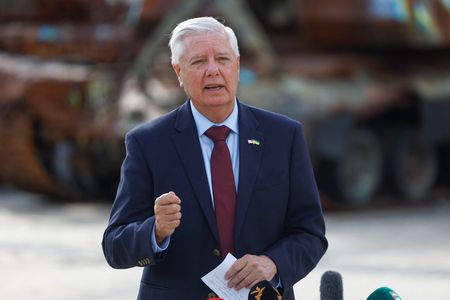
WASHINGTON, July 13 (Reuters) – The sudden death of Senator Lindsey Graham and ongoing absence of Senator Mitch McConnell will weigh on Congress as it returns from its July 4 holiday break on Monday to grapple with key defense and national security legislation during a compressed four-week summer work period.
With McConnell out indefinitely and Graham’s seat temporarily empty, the Republican caucus is down two members, effectively leaving it with a minimal 51-seat majority that could create hurdles for Senate Majority Leader John Thune as he seeks to pass major defense policy legislation and a new Russia sanctions bill, revive a lapsed foreign surveillance program and confirm Trump nominees, including Todd Blanche as U.S. attorney general.
Graham sat on the Senate Appropriations Committee, and McConnell remains a member. Without them, the panel could have a harder time reaching an agreement on government funding to avert a federal shutdown when current funding expires at the start of fiscal year 2027 on October 1.
Graham died from a heart ailment late on Saturday, his office said, with a temporary replacement expected to be named by the South Carolina governor. McConnell, an 84-year-old Kentucky Republican who has spent half his life in Congress, also chairs the Senate Rules Committee and has been absent since mid-June.
In a statement to constituents on Sunday, McConnell said he was hospitalized after a fall and later developed mild pneumonia, but has moved to a rehabilitation center and remains determined to return to the Senate.
“I’ll keep working hard to get back on the Senate floor as soon as possible,” McConnell said without providing a timeline for his return.
As chair of the Senate Budget Committee, Graham sought a new budget package to circumvent opposition from Democrats and pass Republican priorities such as additional defense funding, new tax cuts and some Trump-backed voter restrictions.
Graham and McConnell were also key to Republican hopes of reviving a lapsed Foreign Intelligence Surveillance Act program, as lawmakers scrutinize Trump’s decision to appoint Bill Pulte, an ally with no intelligence background, as acting head of national intelligence.
BLANCHE CONFIRMATION
Their ability to advance legislation renewing FISA authority will depend on Trump’s DNI nominee, Jay Clayton, who is due for a confirmation hearing this week as Pulte’s replacement.
The Senate Judiciary Committee’s loss of Graham also could impact the confirmation of Blanche, who raised hackles among Republicans and Democrats this year as acting attorney general by promoting a now-defunct $1.8 billion “anti-weaponization” fund that critics say could have benefited Trump allies.
McConnell’s absence from chairing the rules committee could create a partisan deadlock on the panel just days after President Donald Trump fired the last three members of the Election Assistance Commission in the run-up to the November midterm elections.
The rules committee would handle any new Trump nominations for the independent body that assists election administration officials nationwide. But with McConnell absent, the 17-member panel would consist of eight Republicans and eight Democrats, potentially keeping it from processing nominees.
Trump and his allies have criticized McConnell several times since the president returned to office. McConnell has opposed Trump’s tariff policies and some of his cabinet picks, as well as his efforts to eliminate the Senate filibuster. As rules chairman, he has also declined to advance Trump’s voter ID bill, known as the SAVE America Act.
The longest-serving party leader in Senate history, McConnell has struggled publicly with health issues in recent years, including freezing up while speaking to reporters in 2023, and was hospitalized for eight days in February with flu-like symptoms.
(Reporting by David Morgan; editing by David Gaffen and Sergio Non)
Brought to you by www.srnnews.com