







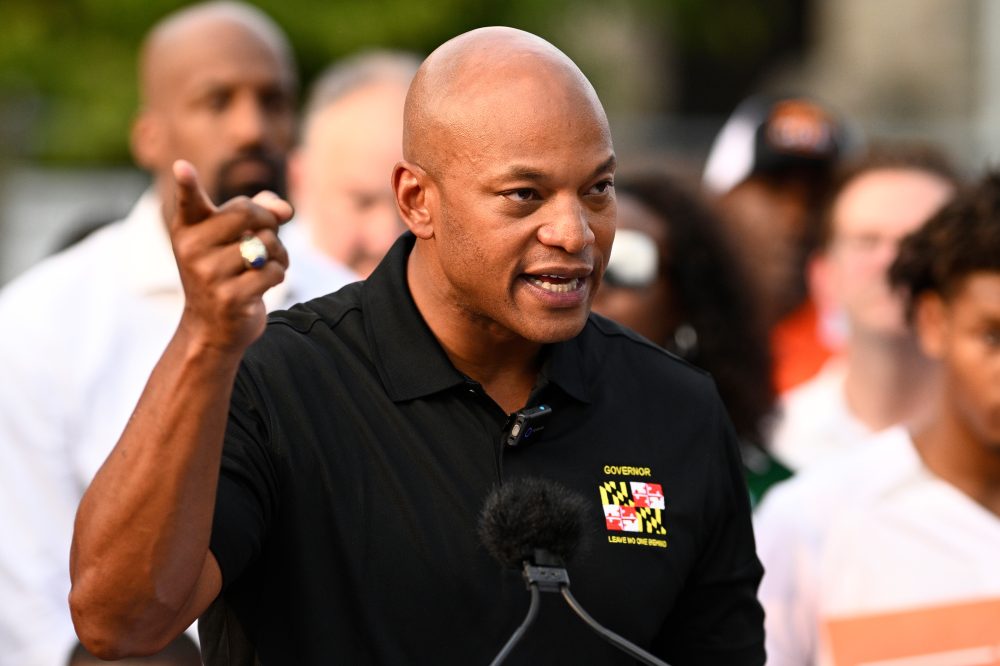
ANNAPOLIS, Md. (AP) – Maryland will create a commission to study potential reparations for slavery after lawmakers voted Tuesday to override a veto by Gov. Wes Moore – currently the nation’s only Black governor – that disappointed many fellow Democrats.
Moore said in his veto letter in May that it was a difficult decision to veto the bill, which was a priority of the Legislative Black Caucus of Maryland. But he wrote there has been enough study of the legacy of slavery, and it was now time to “focus on the work itself” to address it.
“Now is the time for continued action that delivers results for the people we serve,” Moore wrote.
But Democrats who control both chambers of the Maryland General Assembly decided the commission was needed to better examine how to do that.
“This topic isn’t easy, but, again, without formal study, reparations risk being dismissed as symbolic or unconstitutional, regardless of moral merit,” said Sen. Charles Sydnor, a Democrat.
Potential reparations outlined in the bill include official statements of apology, monetary compensation, property tax rebates, social service assistance, as well as licensing and permit fee waivers and reimbursement. Reparations also could include assistance with making a down payment on a home, business incentives, childcare, debt forgiveness and tuition payment waivers for higher education.
Maryland’s Black population is about 30%, the highest percentage of any state outside of the Deep South.
Support for reparations gained momentum in the wake of the murder of George Floyd by a Minneapolis police officer in 2020. However, the issue has been a difficult one, particularly for high-profile Democrats, and comes amid a broader conservative backlash over how race, history and inequality are handled in public institutions.
“At a time of growing attacks on diversity and equity, today’s action reaffirms our shared commitment to truth-telling, accountability, and meaningful progress for Black Marylanders,” the state’s Legislative Black Caucus said in a statement.
In October, California Gov. Gavin Newsom delivered a mixed bag for proponents of bills aimed at addressing racist and discriminatory policies against Black Americans. He signed a law authorizing $6 million for California State University to study how to confirm an individual’s status as a descendant of an enslaved person. But he vetoed other bills the California Legislative Black Caucus championed as tools to atone for the state’s history.
Newsom, who is considering running for president in 2028, signed a law last year to formally apologize for slavery and its lingering effects on Black Californians.
Moore has said he is not planning to run for president in 2028, but he has continued to cultivate a national profile that has drawn pundits’ attention as a potential White House candidate.
New York City lawmakers approved legislation last year to study the city’s significant role in slavery and consider reparations to descendants of enslaved people.
In 2021, Evanston, Illinois, a Chicago suburb, became the first U.S. city to create a reparations plan for its Black residents, using tax revenue from the sale of recreational marijuana.
As recently as a few years ago, Americans viewed the prospect of reparations mostly negatively. A Pew Research Center survey conducted in 2021 found that only about 3 in 10 U.S. adults said descendants of people enslaved in the U.S. should be repaid in some way, such as given land or money. About 7 in 10 said these descendants should not be repaid.
The vote to override Moore’s veto, which required a three-fifths vote in each chamber, happened in a short special session that was called to elect a new House speaker. Former speaker Adrienne Jones, a Democrat who was the state’s first Black and first female speaker, announced earlier this month she was stepping down from the post. On Tuesday, the House voted for Del. Joseline Pena-Melnyk, a Democrat, to be the new speaker.
Maryland lawmakers did not take up congressional redistricting in their one-day special session. Moore has expressed interest in pursuing a new map, which could come up when lawmakers convene in January for their annual 90-day session. However, the state Senate president has said he doesn’t support moving forward with a new map. Democrats hold a 7-1 advantage over Republicans in the state’s eight congressional districts.
Brought to you by www.srnnews.com