





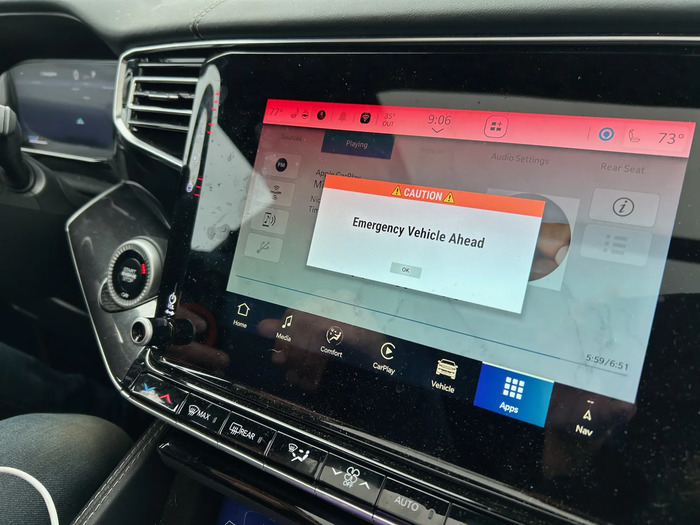
The Illinois State Police (ISP) are enhancing road safety by expanding their notification system to alert drivers of upcoming ISP activities. This initiative, in collaboration with HAAS Alert and the Illinois Department of Innovation & Technology, integrates real-time alerts into vehicle systems and navigation apps. Select vehicles from brands like Chrysler, Dodge, and Mercedes-Benz, among others, will receive these alerts, advising drivers to slow down and move over, complying with Scott’s Law. This law mandates drivers to yield to stationary emergency vehicles. This technological advancement aims to prevent accidents and ensure the safety of both troopers and the public. Watch the press conference here.
“Move Over crashes are preventable and we’ve had too many troopers killed and injured because of them,” said ISP Director Brendan F. Kelly. “To keep both ISP troopers and drivers safe, ISP continues to identify new ways to alert people when they need to slow down and move over. Our partnership with HAAS Alert will help us ensure drivers are paying attention and focused on the road ahead.”
The Illinois State Police will generate information about a crash, traffic stop, motorist assist, or debris in the roadway, which the HAAS Alert system then pushes to Safety Cloud for distribution to select vehicle infotainment systems. As drivers approach the GPS location of the ISP trooper, they will see a police icon and receive an alert to slow down and move over.
“We are committed to leveraging technology to enhance public safety,” said Illinois Department of Innovation & Technology Secretary and State CIO Sanjay Gupta. “This partnership with HAAS Alert is a significant step towards ensuring that drivers receive timely and critical information, ultimately helping to save lives on our roads.”
“As an Illinois small business, we couldn’t be more grateful to do our part in keeping ISP troopers safe on the road,” said Cory Hohs, CEO of HAAS Alert. “Drivers and vehicles today are more connected than ever, and these alerts save lives and prevent tragedies. We’re committed to working with even more automakers in 2025 and beyond to help ensure everyone on the road gets home safely, including and especially first responders.”