





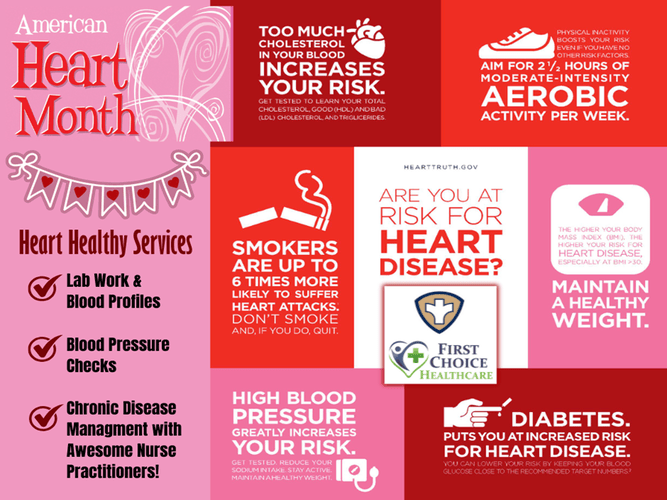
February is American Heart Month, and the Henry and Stark County Health Departments are encouraging everyone to take steps toward better heart health. Cardiovascular disease remains the leading cause of death and a major source of disability in the U.S., impacting both men and women. Simple changes—like getting annual checkups, monitoring blood pressure and cholesterol, eating a healthy diet, staying active, maintaining a healthy weight, and avoiding tobacco—can make a big difference. The First Choice Healthcare Clinics in Kewanee, Colona, and Toulon offer resources to help manage heart health. For more heart-healthy tips and services, contact your local clinic.
- Work with your health care team. Get a checkup at least once each year, even if you feel healthy. A doctor, nurse, or other health care professional can check for conditions that put you at risk for CVD, such as high blood pressure and diabetes—conditions that can go unnoticed for too long.
- Monitor your blood pressure & get your cholesterol checked. The Department and our First Choice Healthcare Clinics remind area residents that our Family Nurse Practitioners can help with the management of high blood pressure and high cholesterol. If you don’t know your blood pressure and cholesterol numbers, we have services that can help you see where you stand.
- Eat a healthy diet. Choosing healthful meal and snack options can help you avoid CVD and its complications. Limiting sodium in your diet can lower your blood pressure. Be sure to eat plenty of fresh fruits and vegetables—adults should have at least five servings each day. Eating foods low in saturated fat, trans fat, and cholesterol and high in fiber.
- Maintain a healthy weight. Being overweight or obese can increase your risk for CVD.
- Exercise regularly. Physical activity can help you maintain a healthy weight and lower cholesterol and blood pressure.
- Don’t smoke. Cigarette smoking greatly increases your risk for CVD. If you don’t smoke, don’t start. If you do smoke, quit as soon as possible.
- Limit alcohol use. Avoid drinking too much alcohol, which can increase your blood pressure.
- Manage your diabetes. If you have diabetes, monitor your blood sugar levels closely and talk with your health care team about treatment options.
- Take your medicine. If you’re taking medication to treat high blood pressure, high cholesterol, diabetes, or another condition, follow the instructions carefully. Always ask questions if you don’t understand something.