





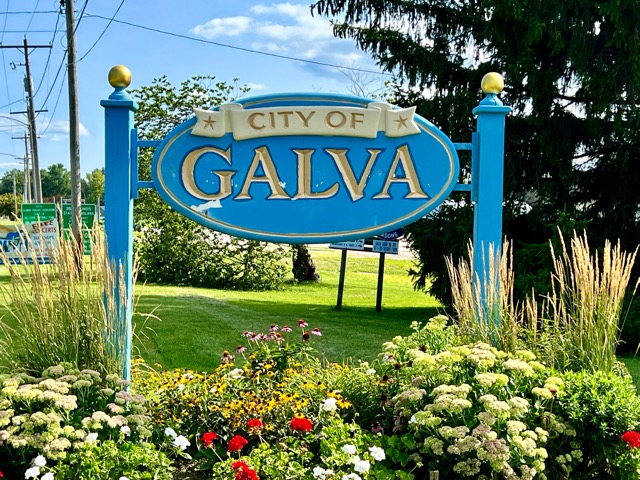
Galva residents oppose a proposed carbon dioxide (CO₂) capture and underground storage project at the Big River Resources Ethanol Plant.
Dustin Williams, Amanda Stodgel, and John Wirth joined Wake Up Tri-Counties to talk about the proposed CO₂ sequestration project near the city of Galva at the ethanol plant. Dustin shares the information he has accumulated regarding CO₂ capture and storage. Amanda is a registered nurse and shares information regarding carbon dioxide exposure and emergency response to a CO₂ leak. A group was formed to keep Galva residents educated and informed of the project. You can join the group on Facebook at “Galva Area CO₂ Awareness Group.” The June 1, 2026, council meeting will have Chief Nate Byers and Mat Schnepple from the Office of Emergency Management to discuss the emergency response plan should there be a CO₂ leak. Regular vehicles need oxygen to run, and since CO₂ replaces oxygen, gas engine vehicles may not run. As of now, the CO₂ from the Burlington, Iowa, Big River plant will be transported by semi trucks, and an estimated 50 trucks will travel from Burlington to Galva daily. The group stresses there are too many unknowns and not enough facts regarding the safety of sequestering CO₂ underground. The ethanol plant will pump the CO₂ underground for 12 years, and there is an additional 10 years of monitoring required. After the monitoring period, the State of Illinois allegedly takes responsibility for the underground cavern. The group said they are attending the May 21st Henry County board meeting. They are hoping that the Henry County board will vote to ban Class VI wells.
Residents of Galva packed the city council chambers to confront officials after learning that City Administrator David Dyer signed a land-use agreement with Lapis Carbon Solutions in November without a council vote. The contract would allow carbon-capture and storage activities on city land, contingent on permit approval, with an upfront payment of $20,000 and a total value of $170,000. Mr. Dyer told the public he wanted the money to hire a geologist to consult on the effects of pumping CO₂ into the ground and the possible long-term effects. Many residents expressed concerns over health, safety, property values, and transparency.
Concerns over the proposed carbon pipeline have spotlighted the often-overlooked dangers of CO₂ exposure. Scientific data show that a 4% concentration is already considered immediately dangerous, according to CDC and NIOSH guidelines. Clinical findings reveal that 10% to 15% concentrations can cause rapid unconsciousness in just minutes, with 17% or higher proving instantly lethal—overwhelming the body in less than a minute. Unlike many gases, carbon dioxide actively disrupts blood chemistry, making prompt local emergency response essential. These facts underline why fully staffed local ambulance crews and airtight safety protocols are crucial if a pipeline leak ever jeopardizes public health.
Galva Fire Department Chief Nate Byers is moving forward with safety preparations for the ethanol plant’s upcoming CO₂ injection project, which remains several years from completion. In anticipation of potential risks, Byers has started collaborating with local fire chiefs who have experience with similar projects, as well as reaching out to the Henry County Office of Emergency Management for discussion about possible leaks and public safety measures. Firefighters from Altona, Oneida, and Wataga are also joining the effort, focusing on truck traffic concerns along Route 34. Byers advocates for early installation of air monitoring systems and public alarms at the plant, alongside clear signage to direct traffic in emergencies. Chief Byers said he is looking into acquiring an electric side-by-side vehicle.
Lapis and Big River Resources unveiled their partnership to tackle carbon emissions at the November 3, 2025, council meeting. Dave Zimmerman, CEO of Big River Resources, emphasized their ongoing collaboration to develop a safer alternative to earlier pipeline proposals. Erik Leigh from Lapis detailed plans for underground CO₂ storage, leveraging Galva’s unique geological layers to secure emissions without disrupting farmland or invoking eminent domain. The project features a rigorous state and federal permitting process and a half-century of post-storage monitoring. Representatives assured local leaders and residents of continued community involvement and openness as the initiative progresses, promising economic and environmental benefits for the region.
In Galva, Illinois, a pioneering partnership between Lapis Carbon Solutions and Big River Resources is set to reshape the future of ethanol production. Their new project aims to capture and store over 725,000 metric tons of carbon dioxide annually, significantly reducing ethanol’s carbon intensity by at least 30%. Supported by federal tax incentives that could bring over $61 million each year for the first 12 years, this initiative combines environmental ambition with financial strength. Experts see this site-specific approach as a potential model, standing apart from controversial multi-state carbon pipeline projects.
The Galva carbon sequestration project has entered the rigorous Environmental Protection Agency Class VI permit process, a step known for its complexity and strict requirements around CO₂ storage safety. Applicants must submit detailed geological information, operational plans, and post-closure strategies to ensure carbon dioxide remains securely underground. The permit review, which often takes years, is compounded in Illinois by the new SAFE CCS Act. This legislation, effective from 2025, enforces additional state-level regulatory controls and outright bans the use of stored CO₂ for enhanced oil recovery. Both federal and state oversight signal heightened scrutiny amid growing public concern.
Class VI wells are specialized injection wells regulated by the Environmental Protection Agency to store carbon dioxide deep underground, a process known as geologic sequestration. These wells aim to capture CO₂ from industrial sources or directly from the air and inject it thousands of feet below the surface, keeping it out of the atmosphere to combat climate change. Strict construction, operation, and monitoring requirements are in place to protect underground sources of drinking water. Public involvement is emphasized, with opportunities to comment on permits and attend hearings. All Class VI projects undergo careful oversight and must meet federal and local safety regulations. Find more information on Class VI wells and carbon capture on the “EPA Website.”
Find more information from Lapis at the “Big River Project” website.
Stay up-to-date with information at the “Lapis Big River Facebook Page.”