





Henry County OEM and Galva City Administrator intend to request a moratorium on CO₂ injections
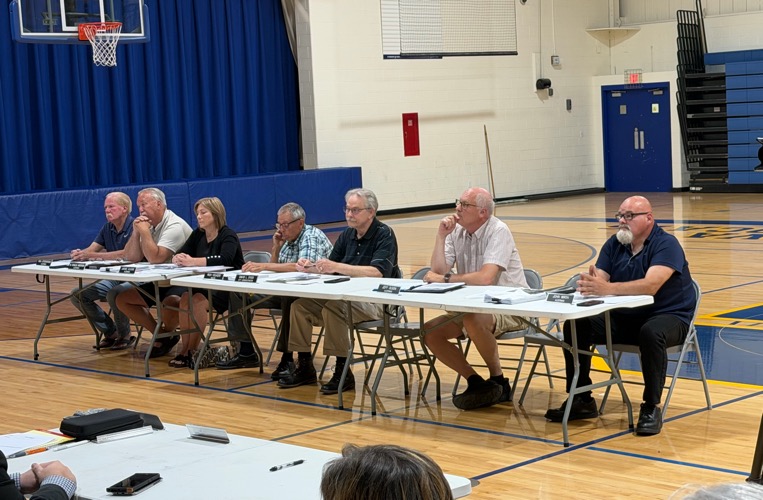
The Galva City Council meeting ended with cheers when City Administrator David Dyer announced he would work with the Henry County Office of Emergency Management (OEM) on a moratorium. The 90-minute council meeting included applause, raised voices, presentations, and some surprises. Registered Nurse Amanda Stodgel presented her findings from a forensic audit of the ambulance service for the City of Galva. Her findings were concerning, and she indicated that she has escalated her findings to the state level. She said that the city moves nearly $250,000 yearly into an ambulance service’s budget. Late fees from water bills are also deposited into the same ambulance service ledger. “Despite a 131% increase in costs, we are operating without updated contracts and have zero improvements and transparency.” She adds that they are essentially funding a “ghost ambulance” service. She said that there are “documented fatalities and disabilities” due to the ambulance service. Amanda said, “Let’s be clear. Hope is not a safety protocol.”
Amanda also talked about an increase in water rates for Galva that Galva residents were apparently unaware of before receiving their water bills. She said the city “quietly raised our utility rates back in May” with no formal notice. She asked how they can trust the city to oversee the complex safety guidelines of the Carbon Capture Sequestration (CCS) Act. “If they keep us in the dark on our utilities, they will keep us in the dark on our safety.”
Dustin Williams presented facts regarding the carbon capture process and the 88% failure rate of the process. He said if the water is contaminated, you can decarbonize the water, but at a huge cost. The CO₂ goes back into the atmosphere when you decarbonize the water. Dustin and audience members questioned how much the CCS process would reduce the carbon footprint on the environment. He said it’s a temporary solution that will produce CO₂ to capture and process the CO₂ into a liquid. “It comes back. Why are they doing it? Because it’s money.” He said there is around $62 million a year on the line.
Henry County Office of Emergency Management Director Mat Schnepple said they have requested plans from Lapis but haven’t received any plans. He said that Lapis isn’t certain of the final wellhead location. They are sending engineers this week to reevaluate the topography and collect samples. At the conclusion of his presentation, Mat Schnepple gave his recommendation for the Henry County Board to approve a resolution for a moratorium on CO₂ injections at the proposed site east of Galva. Mr. Schnepple said he recommends a moratorium because Lapis has not provided any plans or study findings. He said that a 12 to 24-month pause is reasonable. Mr. Schnepple said the OEM doesn’t have a disaster plan for a CO₂ leak because a CO₂ leak was never a threat for the area before now. According to Lapis’s “website,” their first target injection is for 2028. According to Mat Schnepple, the Henry County Board can place a moratorium on CO₂ injection, but it won’t stop the permitting process.
During public comments, Lance Smith announced his official candidacy for Mayor of Galva. Mr. Smith told “Regional Media News” that he is from Galva, and although he moved away for a while, he only wants what is best for Galva.
At the end of the meeting, City Administrator Mr. Dyer said he intends to work with OEM on the moratorium, and the council will vote on the resolution.